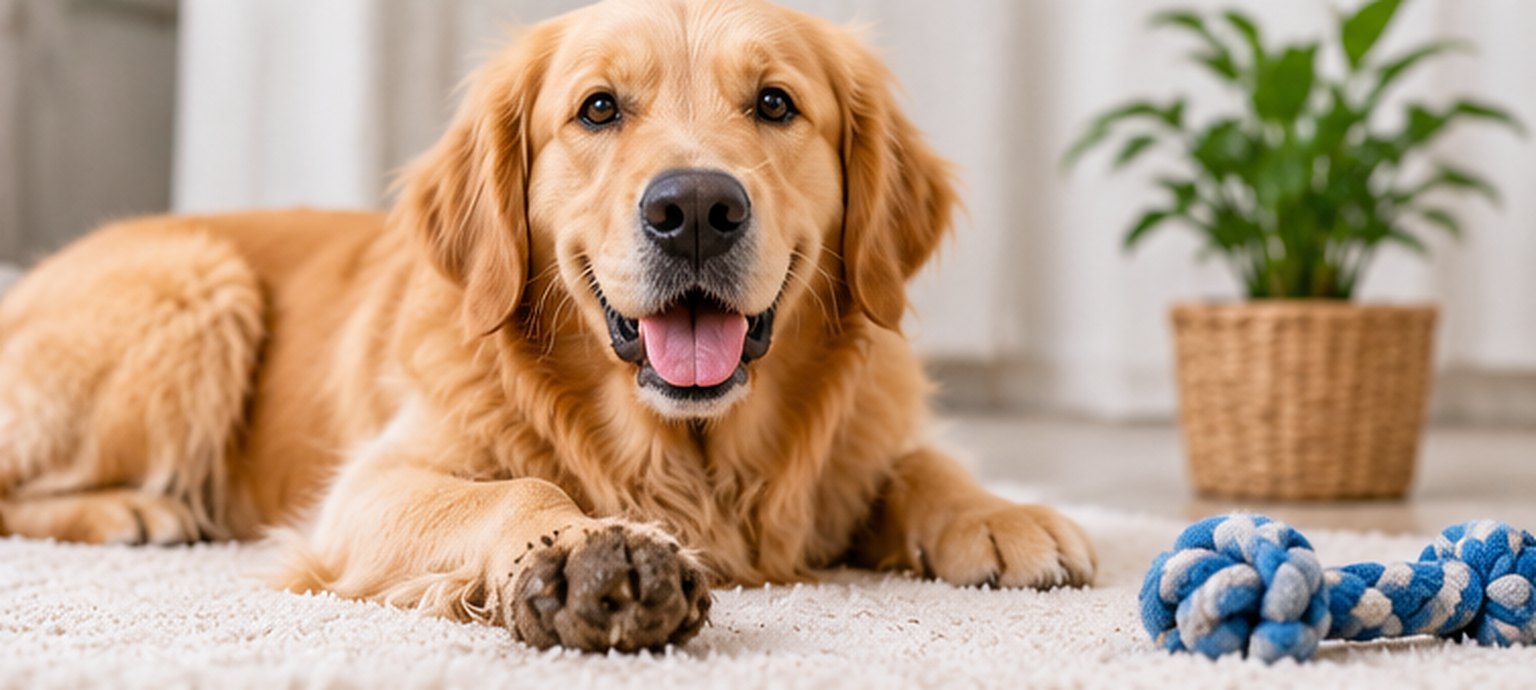
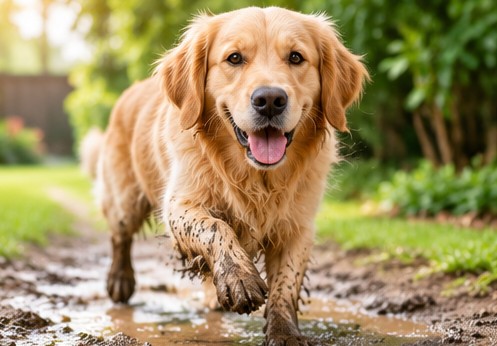
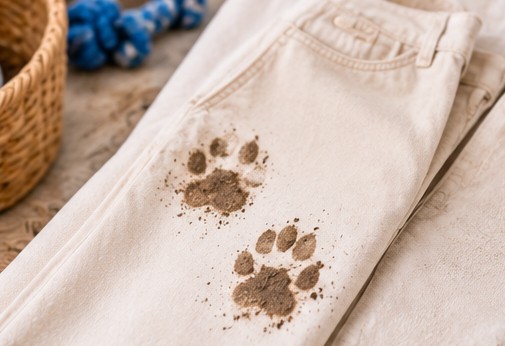
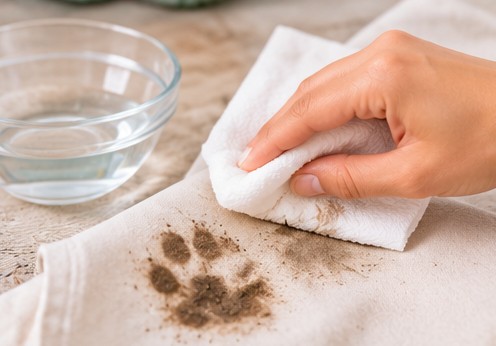
A garden after rain. A beloved retriever delighted to see you. And a perfect set of muddy paw prints pressed onto a pair of pale trousers, exactly where you will be seen for the rest of the day.
Paw prints are among the most common — and most misunderstood — household stains. Rubbed at the wrong moment or washed in the wrong way, a light smudge can become a lasting shadow. Treated with patience, most washable fabrics release mud surprisingly well.
Why mud stains so stubbornly
Mud is not simply dirt and water. It is fine soil particles carrying minerals, plant matter and, often, a little pet saliva or skin oil. When the wet mixture is pressed into fabric, the particles settle between the fibres. Rubbing pushes them deeper, spreads the pigment and can leave a tide mark once the area dries.
Many parts of Australia also have iron-rich soils, which can leave a faint rust or orange tinge on pale cloth. That colour can take a second pass to lift, so patience matters more than strength.
First, let it dry — then brush
It feels counterintuitive, but wet mud is far harder to remove than dry mud. Dry mud breaks into crumbs that can be brushed away; wet mud smears.
- Resist the wipe. Do not press a damp cloth onto fresh mud; it spreads the stain into a larger mark.
- Let it dry completely. Move to a flat, clean surface and allow the mud to firm.
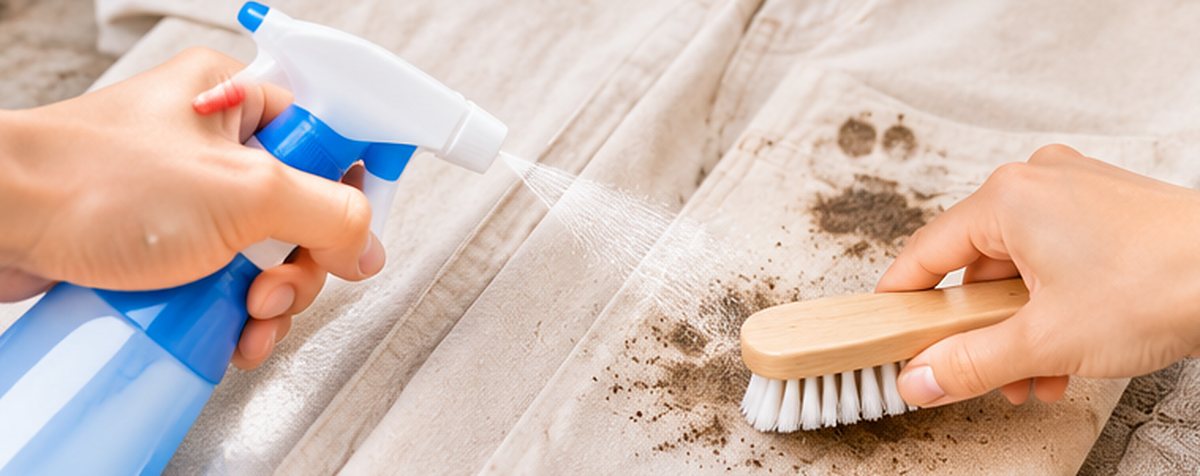
- Remove loose soil. Use a soft-bristle brush, working lightly from the edges inward, and shake the garment outdoors.
- Look at what remains. A pale shadow is normal at this stage; it is treated in the next step.
Treat what is left, gently
Once the loose soil is gone, work from the back of the fabric where possible, so the stain is pushed out rather than through.
- Cool water first. Hold the area under cool running water from the reverse side, or blot with a clean damp cloth.
- A little mild detergent. Work a drop of mild liquid detergent into the mark with fingertips or a soft brush, using gentle movements.
- Rest, then rinse. Leave for a short time, then rinse until the water runs clear.
- Blot, never rub. Press a clean white cloth onto the area to lift moisture and loosened soil.
In the wash: check before you dry
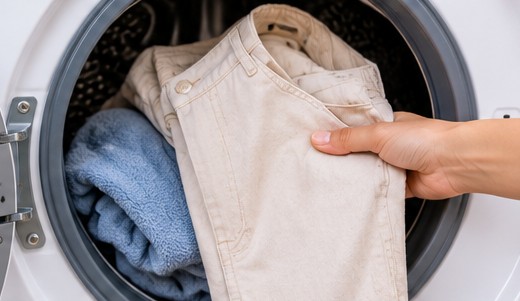
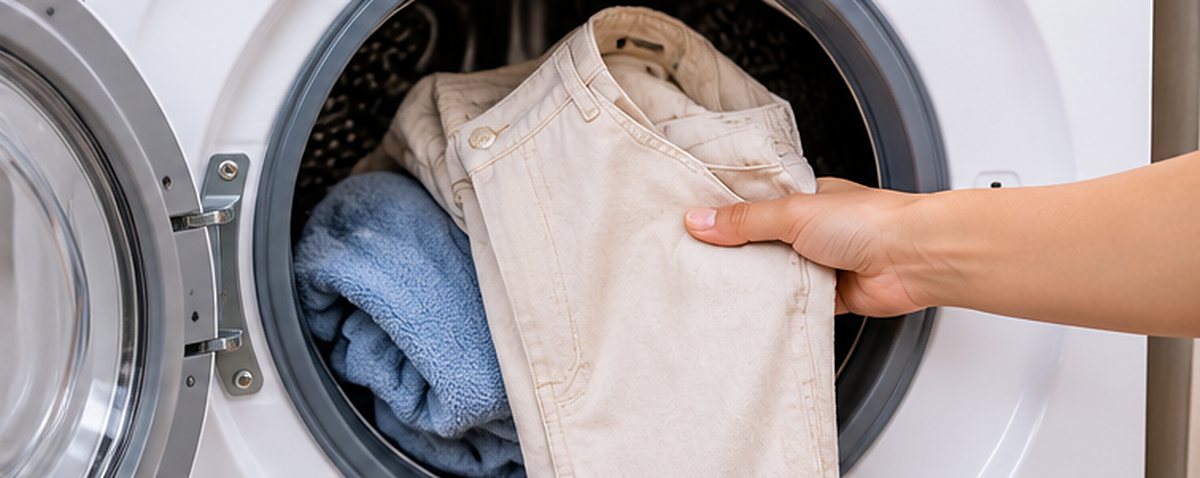
Once the stain has been treated, wash the garment as the label directs. Keep pale pieces away from darker, dye-releasing items, and avoid overloading the drum so the mud can rinse freely.
Inspect the area while the garment is still damp. Heat from a dryer or an iron can set any remaining mark, making it harder to remove later. If a shadow remains, repeat the gentle treatment and air-dry before trying again.
Drying: patience pays
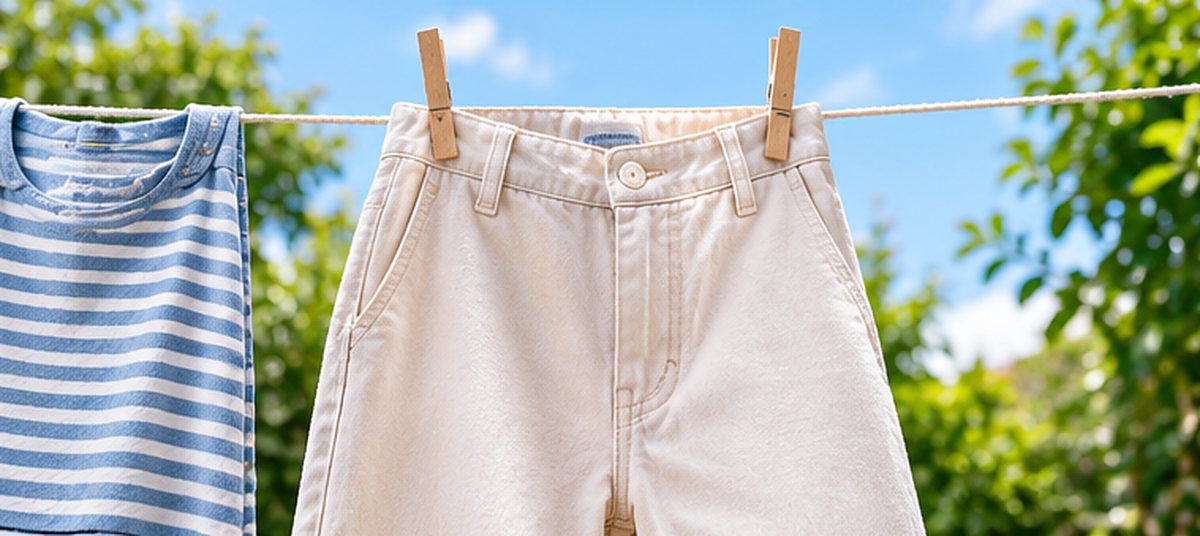
Where the label allows, air-dry the garment on a line or rack so you can see the result in natural light. A fresh breeze is a lovely finish for cotton and linen, though some dark or delicate fabrics are best dried in shade.
Wool, silk and special-care pieces
Not every garment belongs in the machine. Wool tailoring, silk, suede, leather and anything marked dry-clean-only needs a different approach, and water can mark or distort them.
Let the mud dry, then brush gently with a soft brush in the direction of the nap. Do not rub, soak or apply home remedies. Bring the piece to a specialist as soon as practical, and share what it came into contact with — mud, garden soil, pet saliva or anything else.
A considered care guide
| Fabric | First step | Avoid |
|---|---|---|
| Cotton & denim | Dry, brush, cool rinse, mild detergent | Hot water; scrubbing |
| Linen & pale chinos | Dry, brush, test, blot | Strong treatments |
| Wool & tailoring | Dry, soft brush with the nap | Wetting; rubbing |
| Silk & special-care | Light brush; seek assessment | Home remedies; soaking |
Preventing the next paw print
- Wipe at the door. A towel or paw cleaner by the entrance removes most mud before it travels.
- Place a washable mat. A mat or runner at the back door catches the rest.
- Dress with intention. Save your palest trousers for after the greeting, or keep a throw or apron nearby.
- Keep a brush by the door. A quick pass once mud is dry is easier than any rescue.
Frequently asked questions
Should I wipe away fresh mud immediately?
Usually not. Wiping fresh mud tends to smear it deeper into the fibres. Let it dry, then brush away loose soil before any damp treatment.
Can I use hot water on mud stains?
It is best to start with cool water and check the result before using heat. Heat can set any remaining stain, so follow the care label and inspect before drying.
Will a paw print come out of dry-clean-only clothing?
Often, with professional care — but outcomes depend on the fabric and how long the mark has been there. Brush off dry mud gently and seek an assessment promptly.
Does Dryz collect across Australia?
Dryz advertises pickup and delivery in Melbourne. Check your postcode on its website; nationwide collection is not established by this guide.
Beautifully kept, paw prints and all
Life with a dog is full of small, muddy surprises. With a calm routine and the right first steps, most marks can be dealt with long before they become permanent.
Dryz offers Melbourne pickup-and-delivery dry cleaning and laundry, including wash-and-fold and wash-and-iron services. Check your postcode and ask about the specific garment before booking. For tailoring, silk, wool or a persistent mark, share the care label and tell the team what the piece came into contact with so they can advise on suitable handling. Results depend on the fabric and the stain, and no service can promise every mark will disappear.