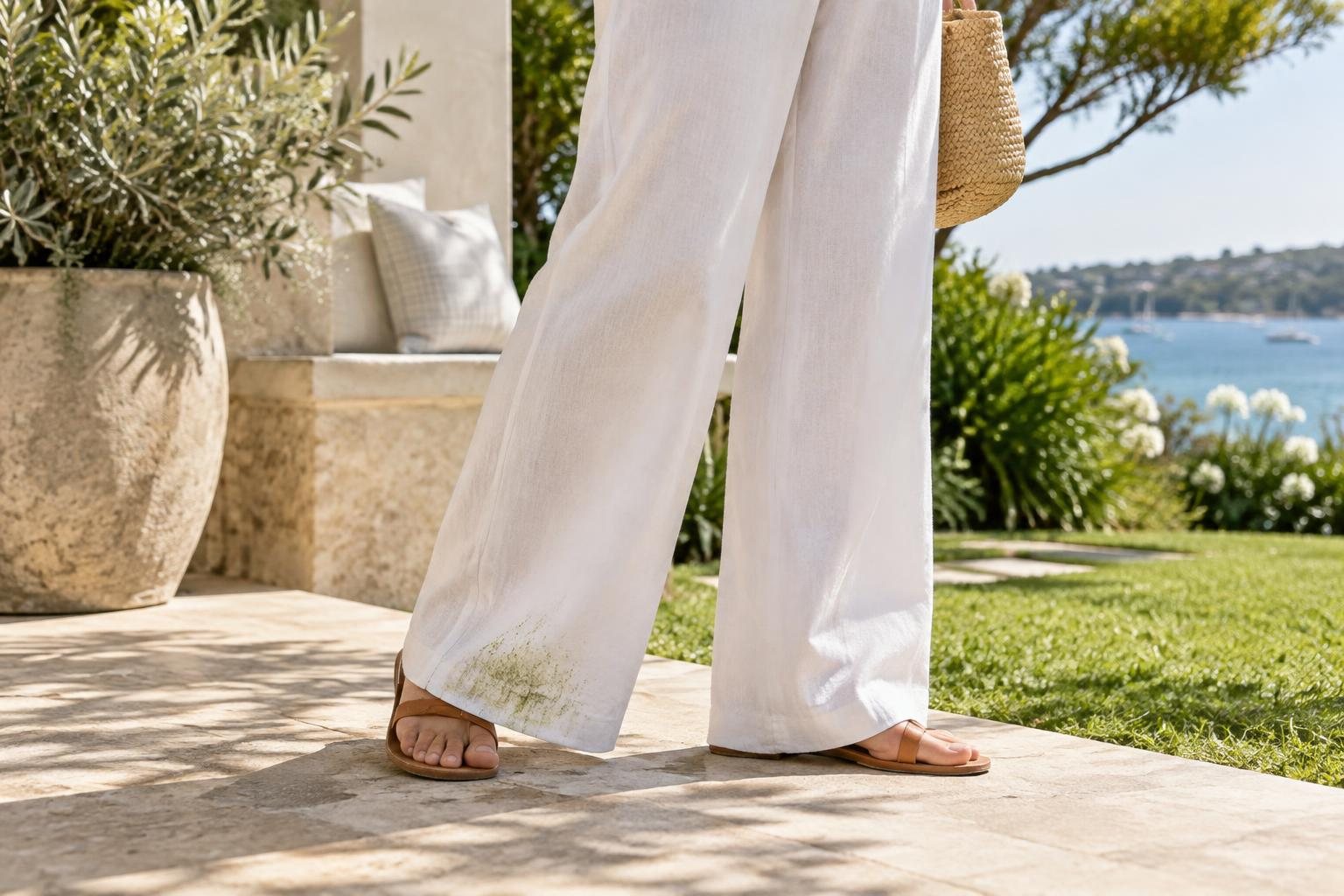
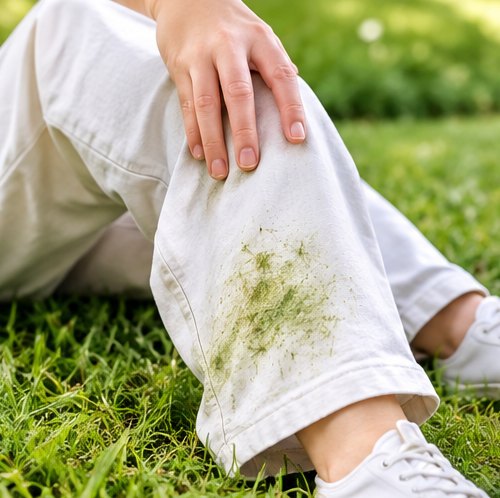
A garden lunch on the lawn. A polo afternoon, a cricket match, a picnic above the water. The crisp white linen trousers look effortless, right up until a soft green smudge appears at the hem.
Grass stains are a familiar part of an Australian summer, and they have a reputation for being stubborn. They are a mix of plant pigments and other organic matter that bond into the fibres, and the wrong first move can set them. The good news is that most grass stains can be lifted from washable fabrics with a patient, gentle approach. The aim is to remove the mark without removing the colour, texture or finish of the garment.
Why grass stains cling
Grass releases green plant pigments along with sap and other plant matter when it is crushed against fabric. These bind readily to natural fibres such as cotton and linen, which is why pale, beautifully woven pieces are the most likely to show them.
Heat makes things worse. Hot water, a tumble dryer or an iron can fix the stain in place, so the first rule is to keep the treatment cool and gentle until you are sure the mark has gone. Fine fabrics add a second consideration: the harder you work a stain, the more likely you are to damage the fibres, so a firm brush is the wrong tool for delicate pieces.
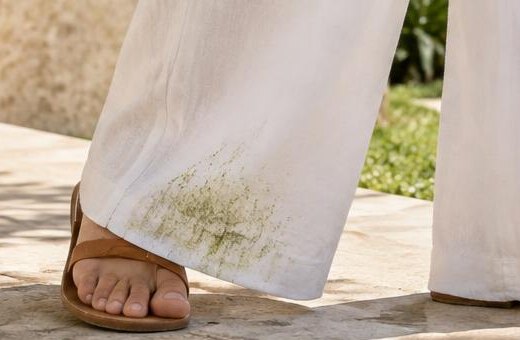
Act on a fresh stain: six considered steps
The sooner you act, the better. Before anything else, check the care label and test any product on a hidden area, such as an inside seam. The method below suits washable white and colourfast cotton and linen; delicate fabrics are covered in the fabric guide further on.
- Inspect and brush away debris. Let the garment dry briefly if it is damp with mud, then gently brush off loose soil and grass fragments.
- Rinse from the back. Run cool water through the stain from the reverse side so the pigment is flushed out of the fabric rather than pushed further in.
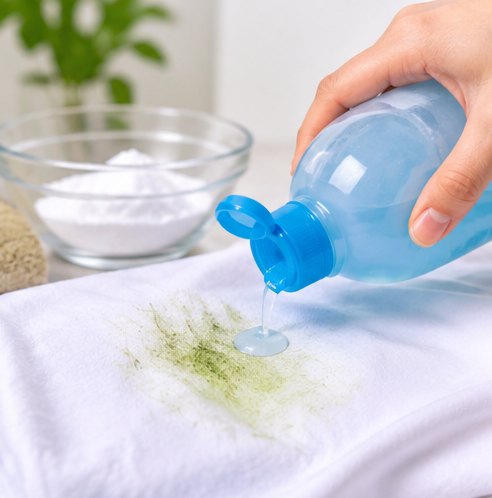
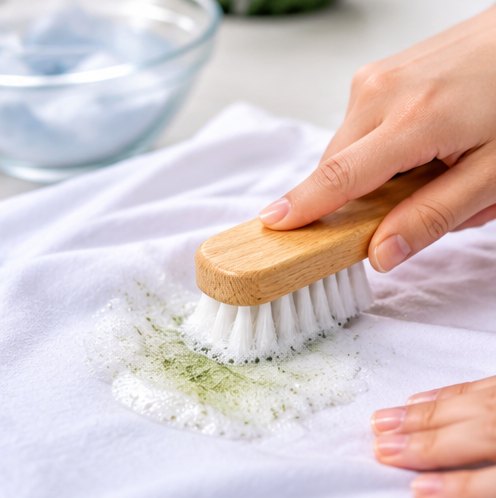
- Pre-treat. Apply a small drop of clear dishwashing liquid or liquid laundry detergent directly to the stain.
- Work it in gently. Use your fingertips or a soft brush with light, small strokes. Leave it for 15 to 30 minutes.
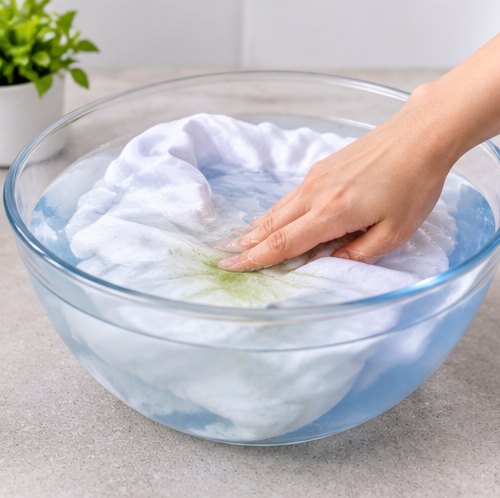
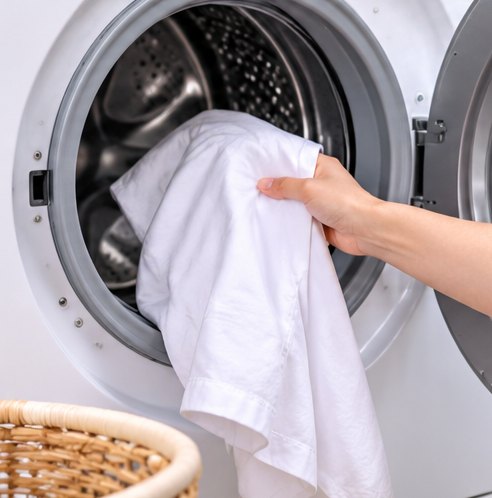
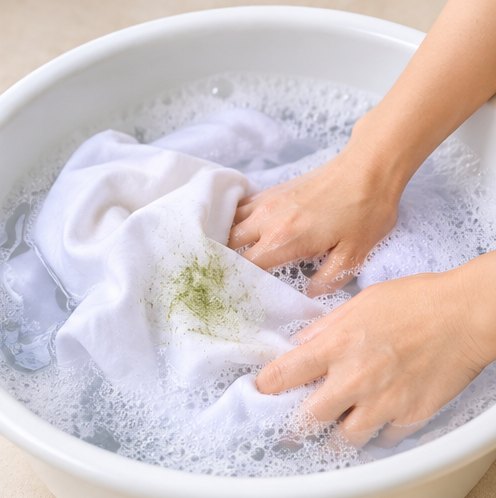
- Soak, then wash. Soak in cool to lukewarm water for 30 minutes or more, then launder as the care label directs.
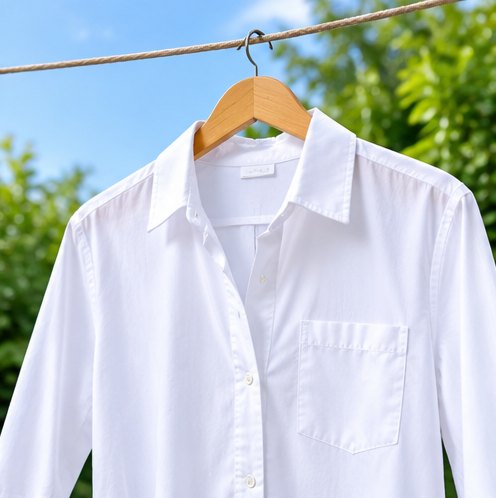
- Inspect, then air dry. Check in natural light while the garment is still damp. If any green remains, repeat before drying.
If the stain has set
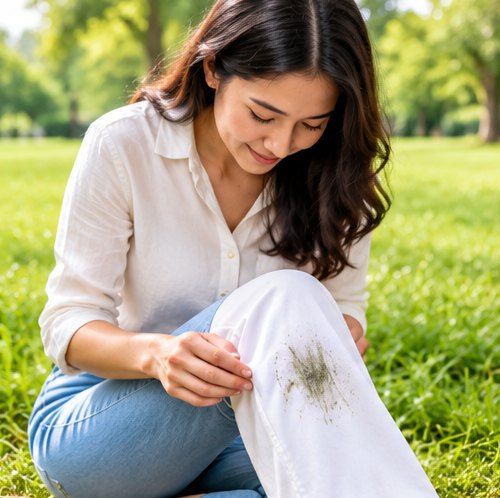
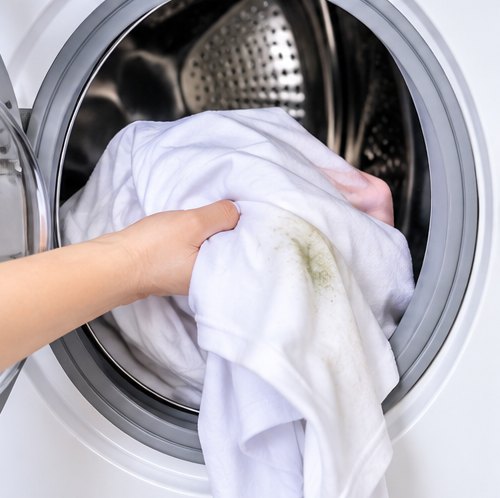
A stain that has already been through the wash, or has sat for days, is not necessarily permanent. Set-in marks usually need a second round and a little more patience, rather than a harsher product.
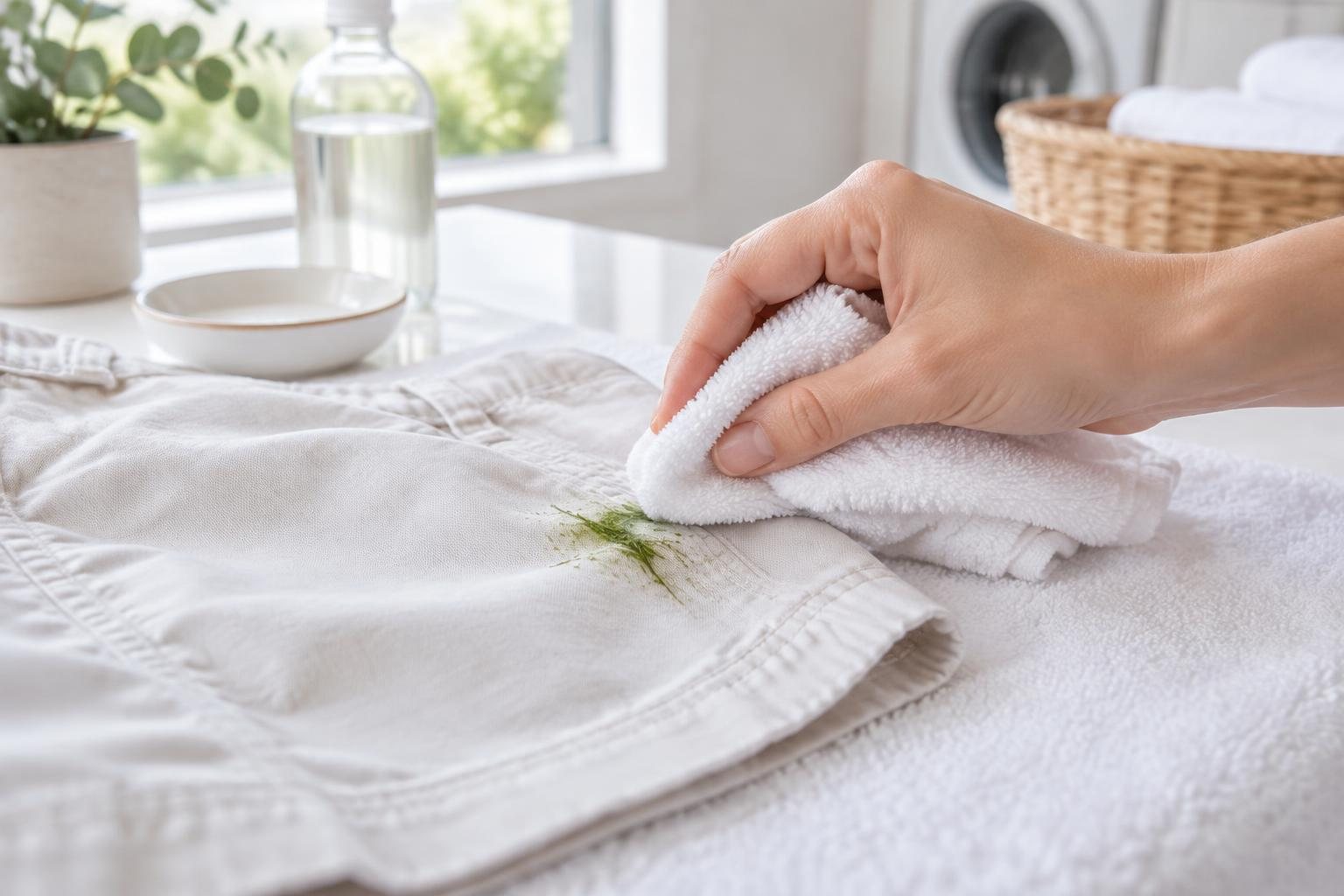
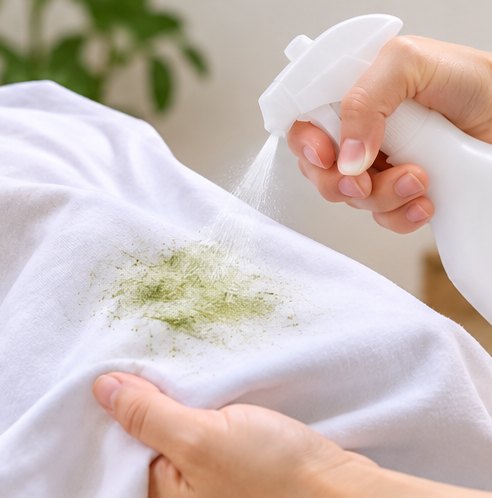
- Dampen and pre-treat. Lightly mist the area and apply dishwashing liquid or an enzyme-based laundry stain treatment. Leave it for 30 minutes.
- Try a diluted white vinegar spray. For washable white or colourfast cotton and linen, a mix of one part white vinegar to two parts water can help. Test on a hidden seam first, and rinse thoroughly.
- For a stubborn mark on white cotton, dab a little methylated spirits or rubbing alcohol onto a cloth, not directly onto the garment, and blot gently. Test first, work in a well-ventilated space, keep away from flame, and avoid it on silk, acetate, wool and dyed or printed fabric.
- Brighten whites if needed. An oxygen-based stain remover can help lift a lingering green tint on white or colourfast cotton. Follow the product directions.
- Wash, inspect, repeat. Launder as the label directs. Two or three rounds are not unusual for an older stain. Air dry until it is gone.

Know your fabric first
Gentle home treatment suits sturdy cotton, linen and denim. The finer the fabric, the more cautious the approach should be. The care label, not the price, decides what is appropriate.
| Fabric | First step | Avoid |
|---|---|---|
| Cotton & linen | Cool rinse, dishwashing liquid, gentle soak | Hot water and the dryer before the stain is gone |
| Denim & twill | Brush off soil; pre-treat; label-led wash | Strong products on dark dye |
| Activewear & sportswear | Cool rinse; pre-treat; gentle wash | High heat and fabric softener |
| Silk & wool | Brush off loose debris; seek an assessment | Soaking, scrubbing, alcohol and bleach |
| Tailoring & dry-clean-only | Do not treat at home; keep the piece flat | Water, brushing and home remedies |
Mistakes that set grass stains
- Starting with hot water. Heat can fix the stain in place. Begin cool.
- Scrubbing hard. It frays fibres and leaves a pale, worn patch on fine fabric.
- Using the dryer to “check” the result. Inspect while damp and dry only when the stain is gone.
- Skipping the patch test. Dyes and finishes react differently. Always test on a hidden seam.
- Waiting too long. Fresh stains lift far more easily than old ones.
Dressing for the lawn
Prevention is the most elegant solution. For a garden party, polo afternoon or picnic, a rug or a folded blanket between you and the grass protects the hems and knees of your best pieces. If a mark does appear, a quick note of where it is, and a cool rinse as soon as you are home, make the later treatment far easier.

When to ask a professional
Some pieces are simply too valuable to experiment on. If the garment is silk, wool, structured tailoring or dry clean only, if its dye is uncertain, or if the stain has survived several careful attempts, a specialist assessment is the safest choice. A professional can identify the fabric and select a suitable method without risking the finish.
Tell your cleaner what caused the stain and what you have already tried. No one can promise that every set-in mark will come out, but early and honest information gives the best chance. For footy, cricket and sporting wear, you may also like our guide to footy season laundry: grass, mud and sweat stains.
Frequently asked questions
Can grass stains be removed after they have been washed?
Often, yes. Re-treat with dishwashing liquid or an enzyme-based stain treatment, soak and rewash, and repeat as needed. Keep the garment away from the dryer until the green has gone.
Is hot or cold water better for grass stains?
Start with cool water. Heat can set the stain. Once the pre-treatment has done its work, wash at the temperature the care label recommends.
Is vinegar safe on all fabrics?
No. It can suit washable white and colourfast cotton and linen when diluted, but it should be avoided on silk, wool and many special-care pieces. Always test first and never mix it with bleach.
Will white linen stay white after treatment?
Usually, if you are gentle and patient. Harsh bleach and aggressive scrubbing can cause yellowing or wear, so choose gentler methods first.
Does Dryz collect across Australia?
Dryz advertises pickup and delivery in Melbourne. Check your postcode on its website; nationwide collection is not established by this guide.
A wardrobe, thoughtfully cared for
Caring for your clothes should feel as considered as choosing them. A calm, patient approach rescues most everyday grass marks, and knowing when to step back protects the pieces that matter most.
Dryz offers Melbourne pickup-and-delivery dry cleaning and laundry, including wash-and-fold and wash-and-iron services. Check your postcode and ask about the specific garment before booking. For silk, wool, tailoring or a stain that has resisted your efforts, share the care label and what caused the mark so the team can advise on suitable handling.