
An ocean swim before breakfast. An afternoon beside the pool. A linen shirt slipped on for a long lunch. Australia’s coastal rhythm makes summer dressing feel effortless — until chlorine, salt water and sand come home with your clothes.
For a wardrobe chosen with care, the aim is not simply to get everything clean. It is to preserve colour, texture, shape and the details that made each piece worth choosing. From designer swimwear to silk cover-ups and beautifully woven beach towels, the right care begins before the laundry basket.
Chlorine: protect colour and stretch
A beautiful pool is still a chemically treated environment. Repeated chlorine exposure can fade colour and reduce the life of elastic fibres, although the effect depends on the fabric and its chlorine resistance. A swimsuit designed for frequent training may behave differently from a delicate fashion piece.
Rinse swimwear in fresh, cool water as soon as practical after swimming. A rinse removes residues; it is not a substitute for the wash specified on the label. At home, gently hand wash if recommended, using a small amount of suitable mild detergent, then rinse thoroughly.
Avoid bleach, fabric softener, vigorous rubbing and wringing unless the manufacturer explicitly permits them. Never try to correct faded colour with a stronger wash: chemical damage is not a stain that can simply be removed.
Salt water: rinse away the residue
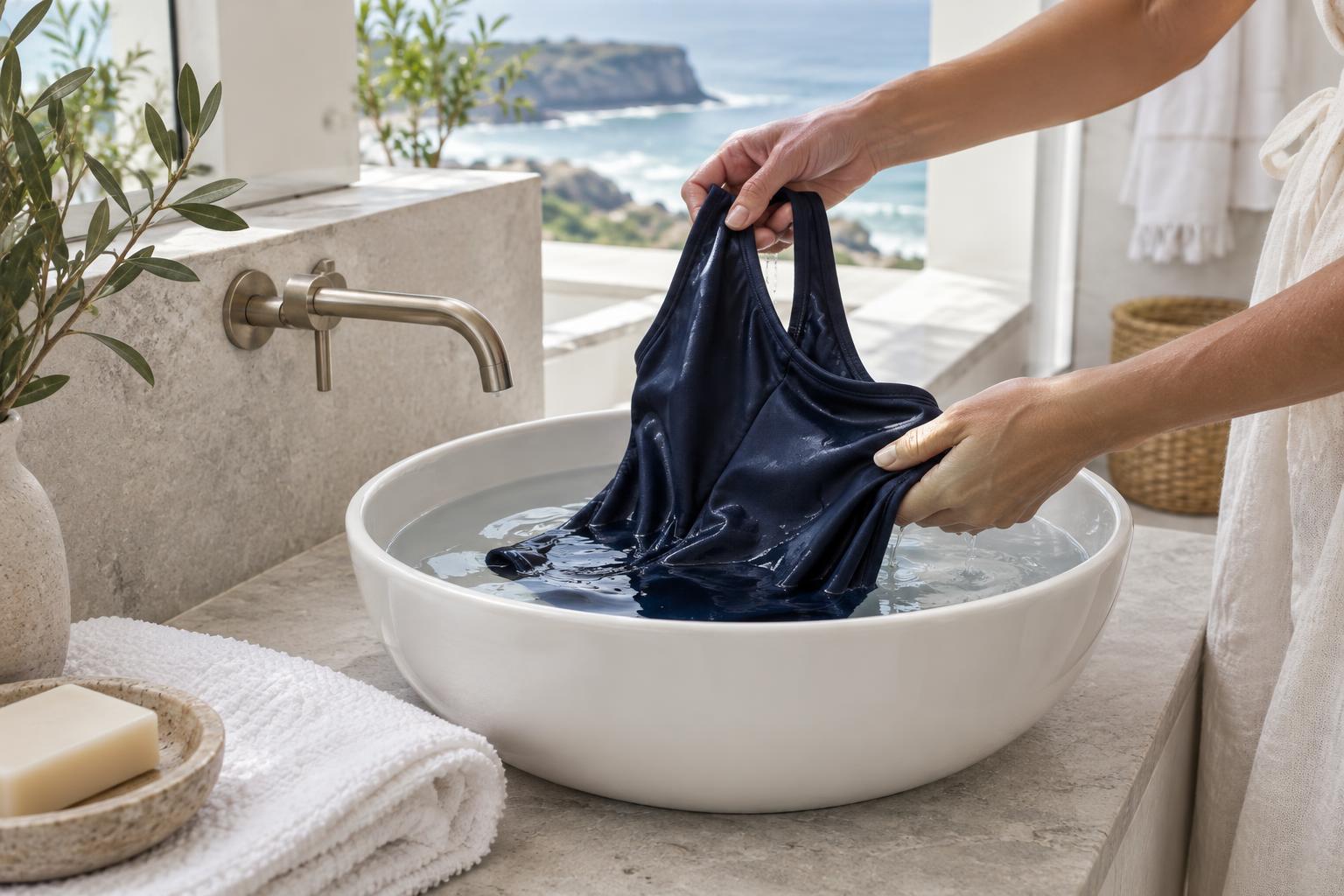
After an ocean swim, salt can remain in the fabric as the water evaporates, leaving a stiff feel or visible residue. Sunscreen, body oils and sea water often arrive together, so a quick shake of your beachwear will not do the whole job.
Rinse washable pieces thoroughly in fresh water and follow with label-appropriate cleaning. Gently move swimwear through the water rather than twisting it. For a linen shirt splashed by the sea, check whether it is washable before treating the affected area; dyes, interlinings and trims can change what is safe.
On the journey home, keep damp swimwear separate from dry clothing in a washable, leak-resistant pouch. Unpack promptly. Do not leave a wet swimsuit rolled inside a towel or sealed in a hot car: moisture and warmth can encourage colour transfer and unpleasant odours.
Sand: remove it without rubbing it in
Fine sand collects in cuffs, pockets, mesh linings and the seams of swimwear. The temptation is to scrub it out, but rough handling can snag delicate knits or work grit further into the fabric.
- Start with loose sand. Away from clean clothing, shake out the garment gently and empty pockets and cuffs.
- Rinse washable swimwear. Turn it inside out and gently move fresh water through the lining and seams.
- Inspect once dry. Any remaining loose grains may release with another gentle shake. Do not scrape with a sharp tool or pull at the lining.
- Protect delicate pieces. For silk, embellishment or dry-clean-only clothing, avoid improvised soaking and ask a cleaner to assess it.
Before laundering beach towels, remove as much loose sand as possible. Wash separately from delicate resortwear and use the towel’s care instructions, rather than assuming every towel suits the same hot cycle.
Linen, silk and the rest of your resort wardrobe
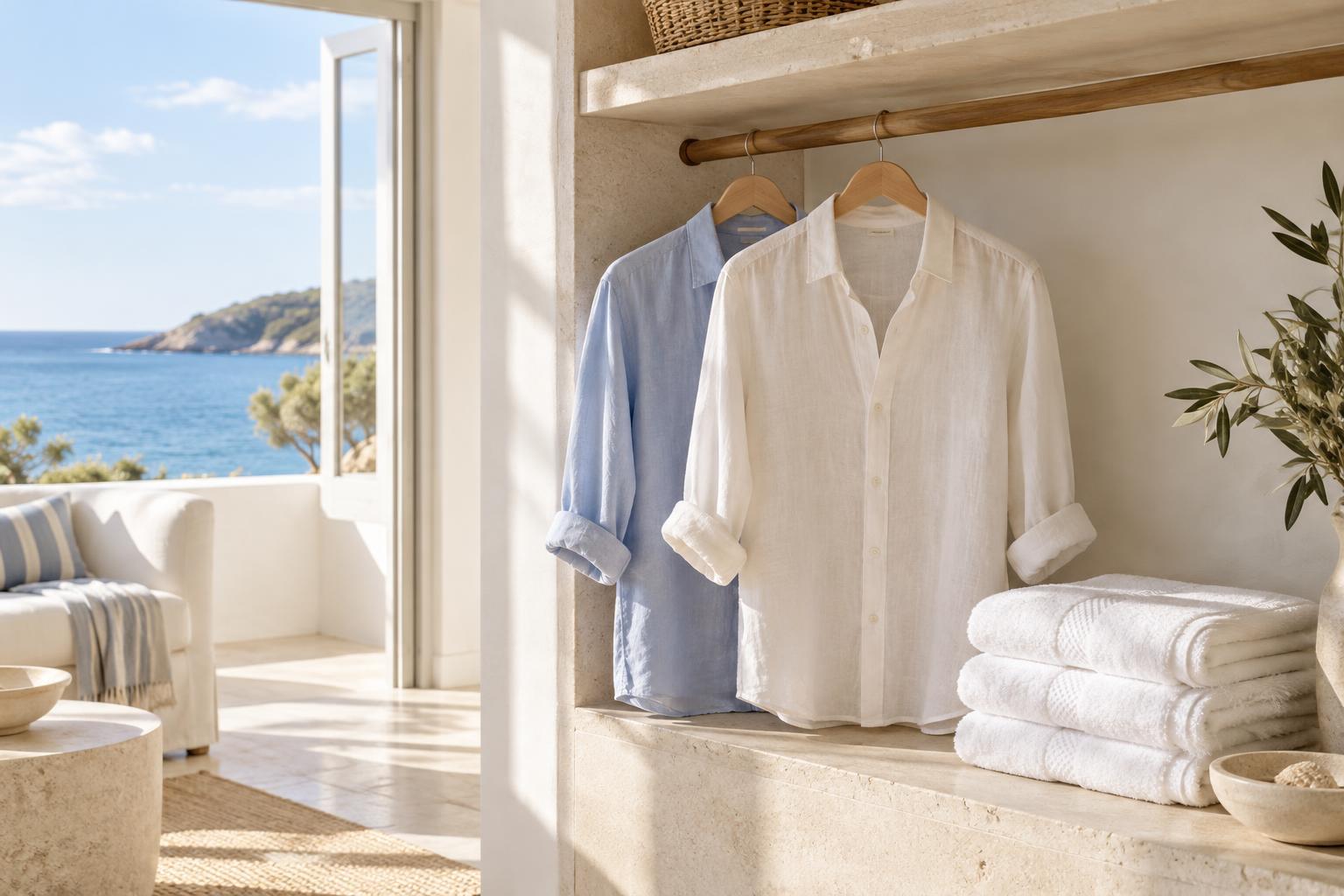
Luxury summer dressing is often built around natural fibres: an airy linen shirt, a silk kaftan, a finely knitted cover-up. They deserve a different routine from performance swimwear. The care label, not the purchase price, determines the appropriate method.
Washable linen and cotton: follow the recommended temperature and cycle, separate colours, and avoid overloading. Reshape and dry as directed. Press only at the permitted setting; buttons, embroidery and bonded details may need additional care.
Silk and special-care garments: water can leave marks or affect dyes and finishes. If the label specifies dry cleaning, do not soak the whole piece to remove a small splash. Tell your cleaner whether it encountered pool water, sea water, sunscreen or tanning oil.
Embellished swimwear: beads, metal hardware and decorative trims can require extra caution. Follow the brand’s instructions and keep the piece away from rough pool edges, timber and stone. A towel between you and the surface helps reduce snagging.
Sunscreen: keep protection, lose the stain
Sunscreen belongs on your skin, not in a laundry experiment. Continue using it according to its directions; where practical, allow it to settle before dressing and avoid wiping excess product onto cuffs or cover-ups.
If a washable garment picks up a mark, gently lift excess product without spreading it. Use only a fabric-compatible stain treatment, test on an inconspicuous area, and follow both product and garment instructions. Inspect before applying heat: drying or ironing can make some stains harder to remove.
A considered care guide
| Piece | First step | Avoid |
|---|---|---|
| Swimwear | Fresh, cool rinse; label-led wash | Wringing and tumble heat |
| Linen & cotton | Shake out sand; check label | Unapproved stain treatments |
| Silk & trims | Check label; seek assessment | Unplanned soaking |
| Beach towels | Remove loose sand; wash as directed | Storing while damp |
Your after-swim ritual
A few deliberate habits keep garment care from becoming the unwelcome end to a beautiful day.
- Before leaving: shake out loose sand and rinse swimwear in fresh water.
- When you arrive home: unpack damp items, separate colours and clean according to each label.
- While drying: gently press out excess water from swimwear, reshape and dry flat in the shade where the brand recommends. Avoid a radiator or tumble dryer.
- Before storing: make sure everything is fully dry. Check seams, trims and stains before packing for the next trip.
Frequently asked questions
Can I put designer swimwear in the washing machine?
Only if its care label permits it. Many brands recommend gentle hand washing. Do not assume a delicate cycle is suitable for every lining, trim or elastic fabric.
Will washing reverse chlorine damage?
No. Washing can remove residues, but it cannot reliably restore faded dye or elasticity lost through chemical exposure. Prevention is more useful than a rescue wash.
Should swimwear be dry cleaned?
Do not assume so. Swimwear brands often prohibit dry cleaning. Follow the label and confirm suitability before including it in a professional cleaning order.
Does Dryz collect across Australia?
Dryz advertises pickup and delivery in Melbourne. Check your postcode on its website; nationwide collection is not established by this guide.
A summer wardrobe, thoughtfully cared for
From a weekend on the Mornington Peninsula to an ocean-side escape, caring for your clothes should feel as considered as choosing them. Simple rinsing habits protect swimwear; appropriate laundering and finishing keep the rest of your wardrobe ready for the next occasion.
Dryz offers Melbourne pickup-and-delivery dry cleaning and laundry, including wash-and-fold and wash-and-iron services. Check your postcode and ask about the specific garment before booking. For silk, embellished pieces or persistent sunscreen marks, share the care label and exposure details so the team can advise on suitable handling. Never assume ordinary wash-and-fold processing suits delicate swimwear.