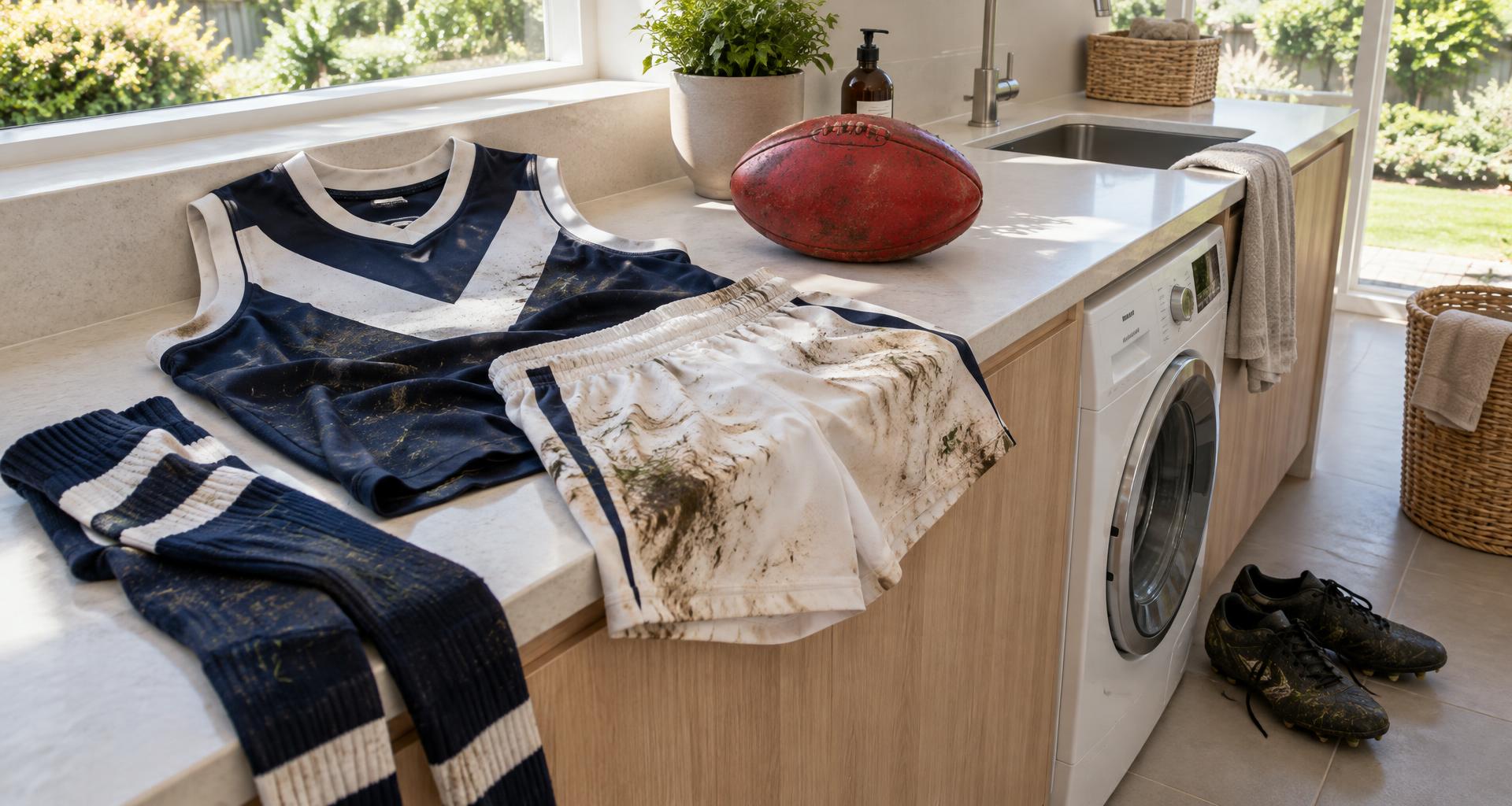
The final siren has sounded, the post-match lunch is over, and the weekend’s evidence is waiting in the laundry: grass-striped shorts, mud along the hems and a guernsey that has worked as hard as its wearer. Whether it is junior footy on a suburban oval or your own Saturday match, a little considered care keeps the kit looking sharp for the next round.
For a household that values beautifully maintained clothes and an unhurried Sunday, the answer is not a hotter wash or a stronger fragrance. It is treating each stain correctly, respecting the fabric and avoiding heat until the marks are gone. Here is a practical approach to grass, mud and sweat, with extra care for technical sportswear and the finer pieces worn on the sidelines.
Before the first wash: a thoughtful Sunday reset
Shake out the bag outdoors and separate boots, mouthguards and protective equipment from washable clothing. Read every care label, including the socks: a polyester guernsey, stretch compression layer and merino base layer may need different treatment.
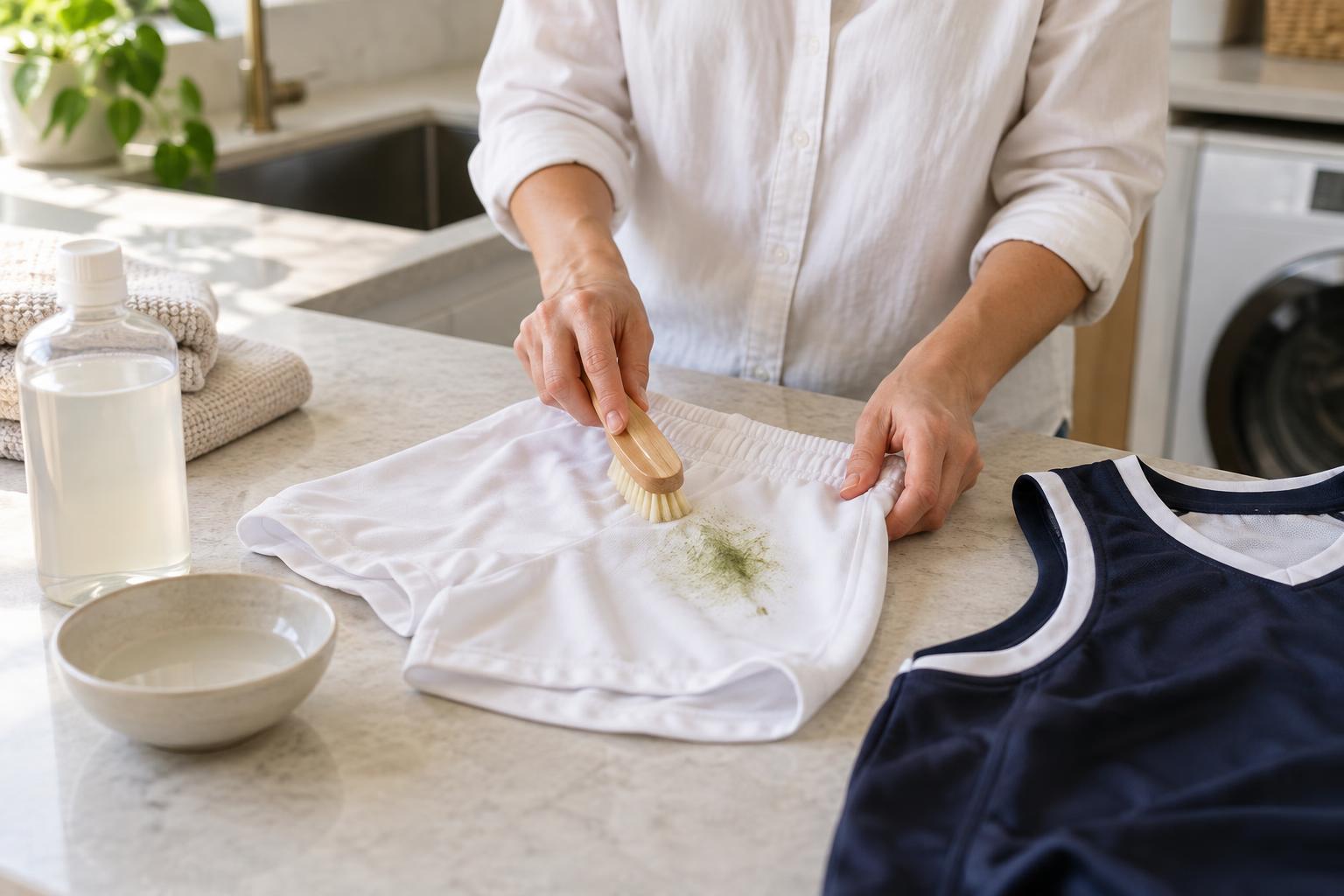
- Sort by colour and fabric. Keep white shorts apart from dark guernseys, and separate heavily muddy kit from towels and everyday laundry.
- Check hidden details. Empty pockets, close zips and fasten hook-and-loop tabs. Inspect printed numbers, club badges and bonded seams.
- Test the treatment. Dab a little of the chosen product onto an inconspicuous seam, following the product instructions. Stop if colour transfers or the finish changes.
- Know the exception. Signed memorabilia, vintage wool guernseys and garments marked dry clean only are not candidates for a standard sports wash.
Grass, mud and sweat need different care
A single pair of shorts can carry all three. Grass leaves green pigments and organic matter; mud brings particles that can spread when rubbed; sweat combines with body oils and microbes to leave odour, especially in synthetic kit. Treat the visible marks first, then wash to remove the remaining soil.
| Weekend stain | First move | Avoid |
|---|---|---|
| Grass | Pre-treat washable fabric with a suitable enzyme detergent. | Hard scrubbing or drying before inspection. |
| Mud | Let surface mud dry; gently brush off the loose soil. | Rubbing wet mud deeper into the weave. |
| Sweat & odour | Air the kit and wash promptly with the correct dose. | A sealed bag, excess detergent or fabric softener on technical kit. |
How to remove grass stains from footy shorts
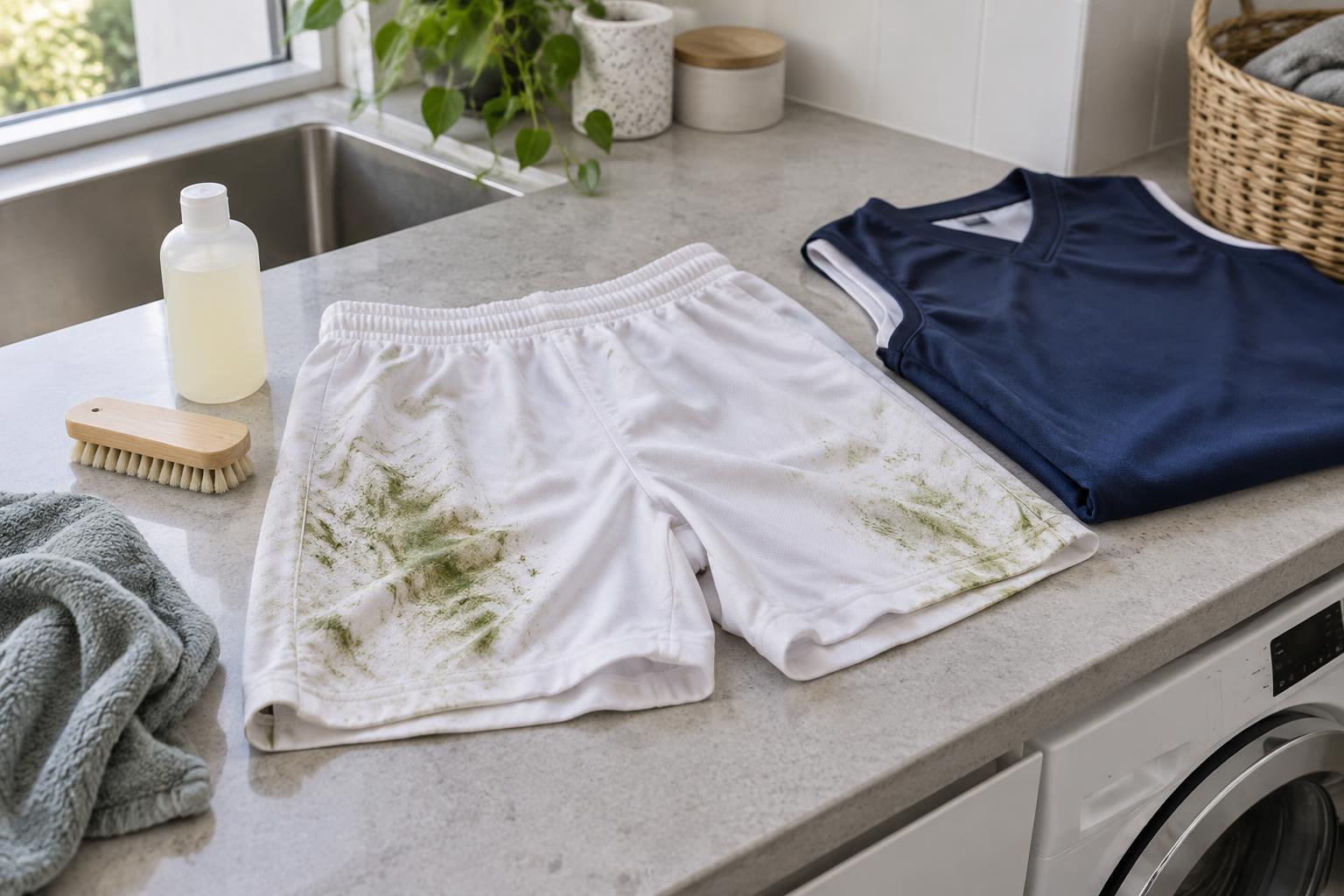
Fresh grass stains generally respond better than marks left through the week. An enzyme-containing laundry detergent can help on suitable washable cotton and synthetic fabrics, but not every formula is appropriate for every fibre.
- Lift any loose debris. Remove grass blades and surface grit without rubbing the mark across clean fabric.
- Pre-treat the green area. Apply an enzyme liquid detergent or a stain treatment labelled as suitable for the garment. Gently work it in with your fingers or a very soft brush on robust fabric; avoid brushing delicate weaves, prints and stretch panels.
- Give the product its instructed contact time. Follow its label rather than leaving a concentrated treatment on overnight. Do not let it dry on the fabric unless the manufacturer specifically allows it.
- Wash according to the care label. A cold or cool cycle is a sensible starting point for many sports garments. If a warmer wash is needed, use it only within the garment and detergent instructions.
- Inspect while damp. If green remains, repeat a suitable treatment before drying. Stubborn or older stains may not disappear completely.
How to lift mud without spreading it
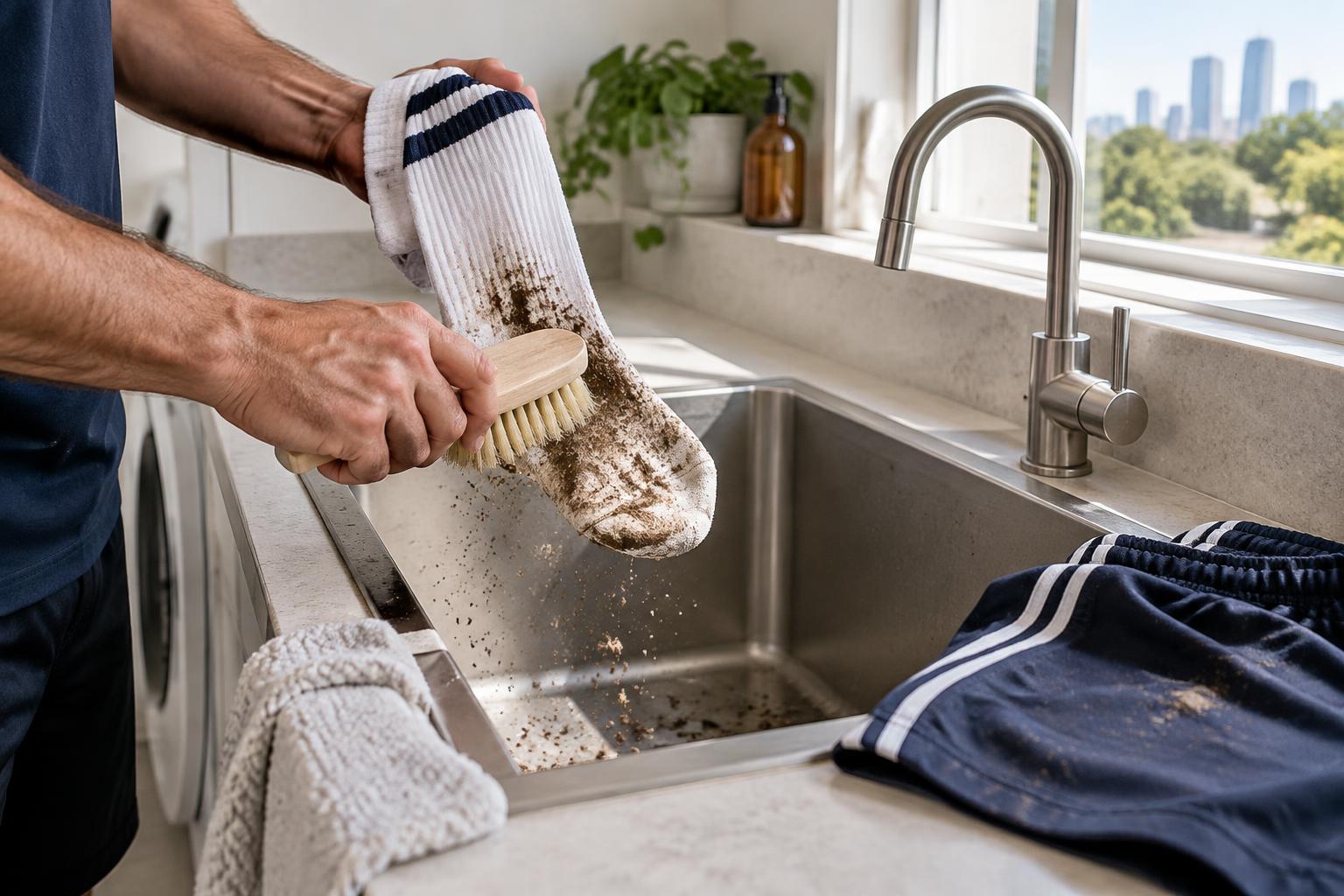
Resist the urge to scrub a wet, muddy knee. Set the muddy item aside in a ventilated place until the surface soil is dry enough to lift. This is different from leaving damp, sweaty clothes bundled in a bag: spread the garment out rather than enclosing it.
- Brush away loose, dry mud outdoors. Use a soft brush or gently shake the garment. Do not scrape with anything sharp.
- Rinse the remaining mark. On washable fabric, run cool water through the reverse side where practical, taking care around badges and trims.
- Pre-treat the residue. Use a fabric-compatible liquid detergent or stain remover, then wash separately from lightly soiled clothing.
- Check the seams and hems. If brown residue remains, treat again before drying. Clay-rich soil can be persistent; do not escalate to harsh bleach on a valuable garment.
For a mixed mud-and-grass mark, remove the loose mud first and then target the green staining. Boots are a separate job: remove dirt gently and follow the boot manufacturer’s cleaning instructions, rather than putting them into the clothing wash.
Sweat and odour: clean, not merely perfumed
Technical fabrics are designed to perform on the oval, but body oils can linger if the wash is overloaded or detergent does not rinse away. A stronger scent may cover the problem without removing it.
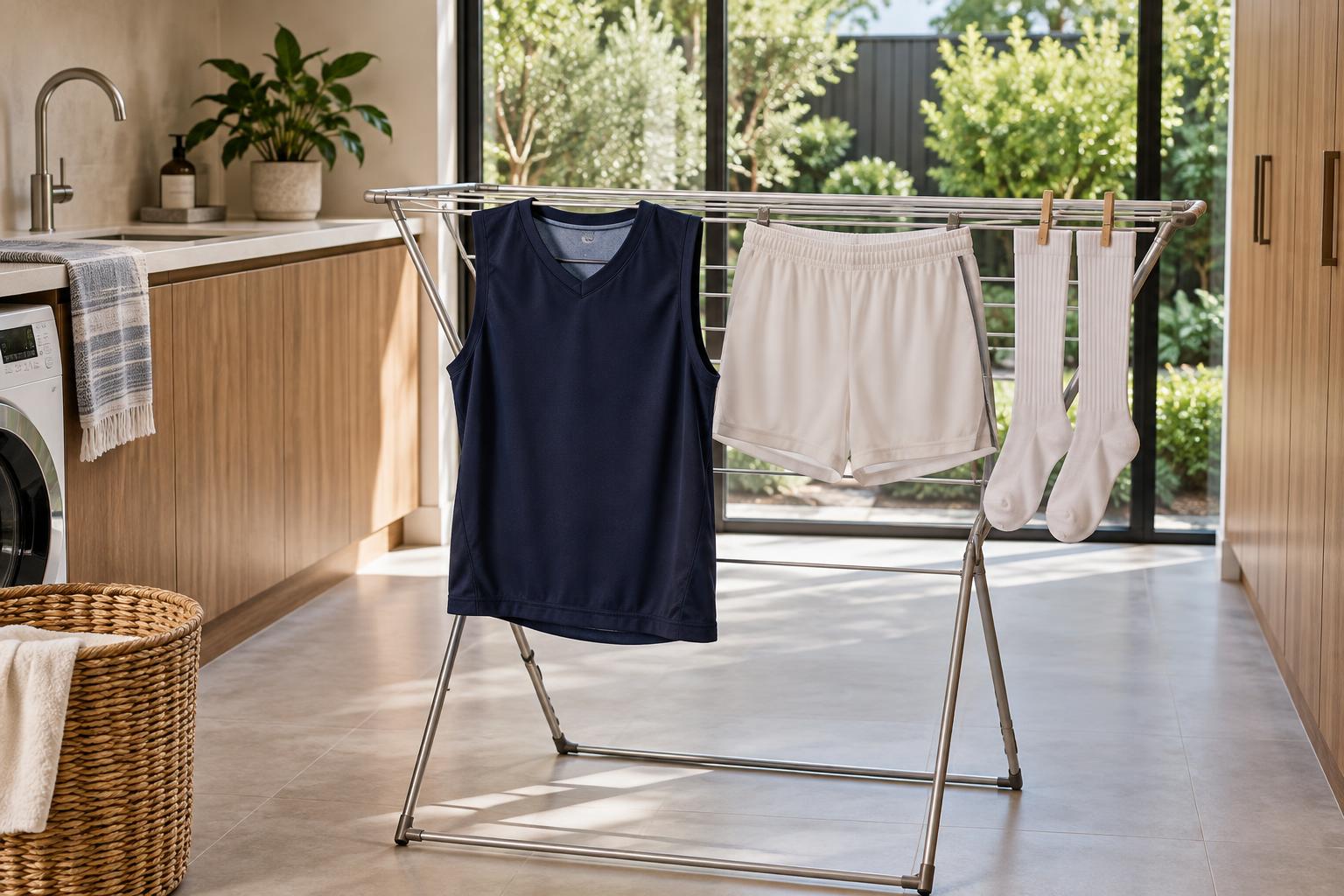
- Wash promptly. If you cannot wash straight away, spread the kit out to air in a well-ventilated space, away from other clean clothing.
- Turn suitable garments inside out. This exposes the areas in contact with the skin and helps protect outer prints. Follow any instructions for badges or transfers.
- Dose accurately. Use a detergent suitable for sportswear and the machine type. Adjust the dose to the load and soil level using the pack instructions; more is not automatically better.
- Leave room in the drum. Clothing needs to move and rinse freely. A packed drum is especially unhelpful for muddy or oily kit.
- Skip fabric softener on performance wear. Many manufacturers advise against it because residues can interfere with moisture management. Check the garment guidance.
- Dry fully before storing. Use good airflow, ideally in shade or indoors away from direct heat. Do not pack damp kit into a drawer or sports bag.
If odour returns as soon as the kit warms up, repeat an appropriate wash and check your machine’s dispenser, seals and filter. Follow the machine manual for maintenance. Avoid improvised chemical cocktails: never mix bleach with vinegar, ammonia or other cleaning products.
Protect the pieces worth keeping
The best routine treats the kit as a collection of different garments, not one indistinguishable load. Give premium sportswear, natural fibres and sideline layers their own care.
👕 Performance guernseys
Check the wash temperature and protect club badges, printed numbers and bonded seams. Avoid direct ironing on transfers.
Label-led care🩳 Compression layers
Use a gentle, fabric-compatible wash. Keep elastane away from chlorine bleach, softener and high heat.
Protect the stretch🧶 Merino base layers
Use an approved wool detergent and the permitted cycle. Avoid ordinary enzyme treatments; dry as the label directs.
Separate wool care🧥 Sideline tailoring
For a wool coat, cashmere knit or structured jacket marked dry clean only, avoid home soaking. Ask a professional cleaner to assess marks.
Professional assessmentFor a collectible or signed guernsey, seek specialist advice before any cleaning. A signature or historic trim may be more vulnerable than the fabric itself.
The shortcuts that cost more than they save
| Shortcut | Why to reconsider | Better approach |
|---|---|---|
| Hot wash for every stain | Can damage stretch fibres, finishes and prints. | Use the temperature permitted by the care label. |
| Scrubbing wet mud | Spreads soil and can abrade the fabric. | Lift loose dry mud, then rinse and treat. |
| Extra detergent | May leave residue if it does not rinse away. | Measure for the load and soil level. |
| Softener for freshness | Can affect technical fabric performance. | Use suitable detergent and dry thoroughly. |
| Drying a visible stain | Heat can make remaining marks harder to remove. | Inspect damp clothing and re-treat first. |
Frequently asked questions
Keep the weekend. Leave the laundry guesswork.
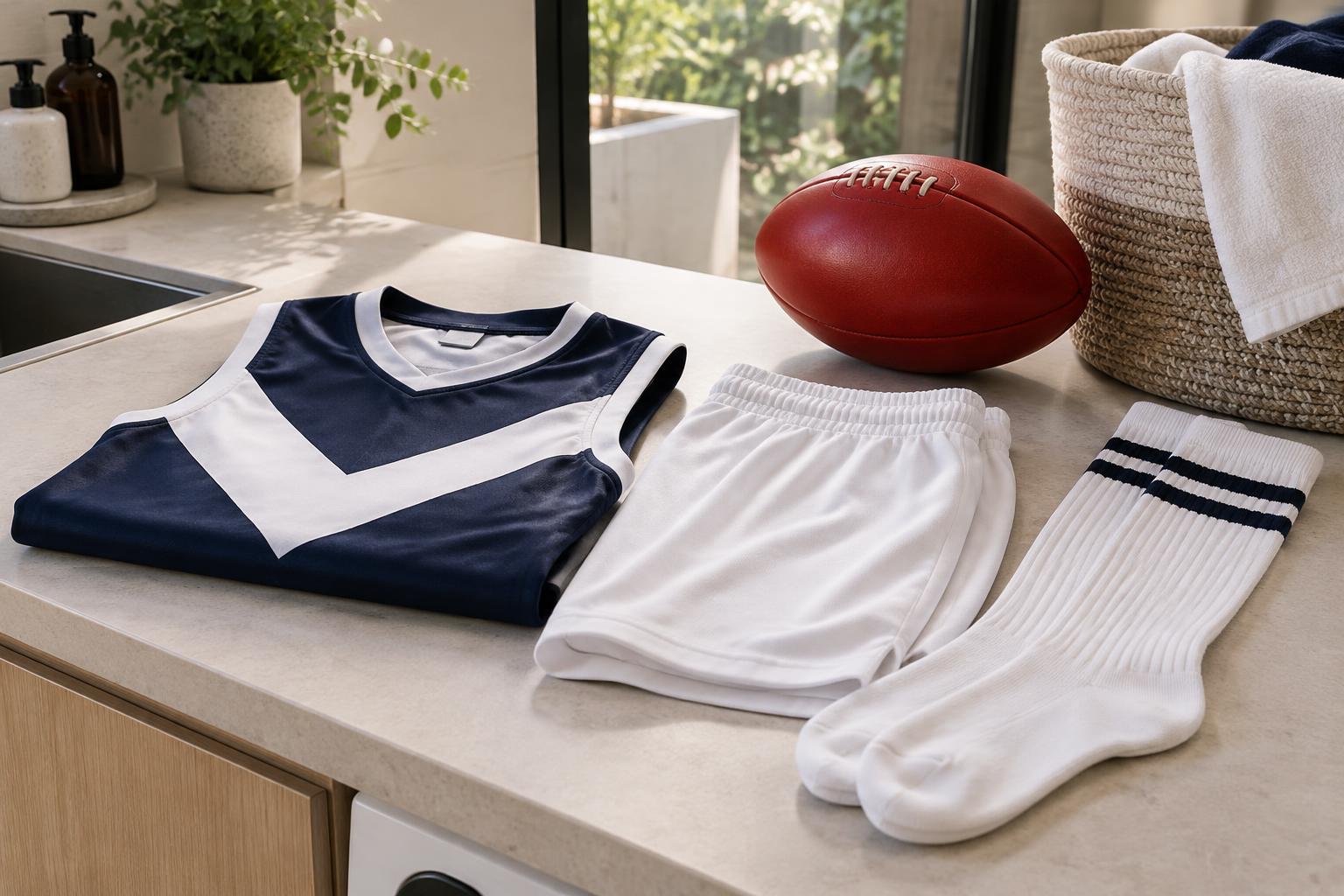
A considered post-match routine is simple: air the kit, remove loose mud, pre-treat grass, wash for the fabric and inspect before drying. That protects the finish and fit of good sportswear while keeping next weekend’s preparation effortless.
When the laundry pile extends from footy shorts to fine knitwear and sideline tailoring, professional care can be a worthwhile convenience. Dryz provides Melbourne households with pickup and delivery laundry and dry cleaning. Describe the stains, identify any delicate pieces and let the team advise on the suitable service — without expecting a guaranteed result for every mark.