
Your favourite work blazer. The shirt that always photographs well. The trousers that fall perfectly at the ankle.
When a work wardrobe is built around well-made pieces, constantly replacing them can feel wasteful — and often unnecessary. The better approach is to make the clothes you already own work harder through better care between wears.
Think of it as wardrobe maintenance rather than laundry: fewer aggressive washes, less unnecessary heat, better storage and quick attention to small problems before they become permanent.
1. Why Work Clothes Lose Their Polish
Professional clothing usually faces repeated friction: office chairs, car seats, bags, desk edges, commuting, perspiration and frequent cleaning. Over time, those small stresses can show up as fading, pilling, shine, loose shape, worn collars or tired-looking fabric.
The biggest mistake is assuming that more washing automatically means better care. Every wash and dry cycle exposes fabric to movement, water, detergent and — depending on the method — heat.

A gentle refresh can be very different from a full wash — especially for structured workwear.
2. Wash Less, Wash Smarter
For washable shirts, trousers, knitwear and other everyday pieces, a few simple changes can reduce unnecessary stress on the fabric.

🧊 Use cooler cycles
Tap to reveal the care tip.
Why it helps
Cooler washing is generally gentler on many fabrics and can help reduce colour loss and fibre stress compared with hotter cycles.

🧴 Choose detergent carefully
Tap to reveal the care tip.
Why it helps
Use the amount recommended for the load and choose a detergent appropriate for the garment and colour. More detergent is not automatically better.
- Turn darker garments inside out before washing when the care label permits.
- Do not overload the machine. Clothes need room to move without excessive friction.
- Close zips and fasteners to reduce snagging and abrasion.
- Separate delicate or structured pieces from heavier items such as towels and denim.
3. Drying Can Make or Break the Finish
Drying is where many otherwise careful laundry routines go wrong. High heat can be hard on fibres, while poor hanging can leave shoulders stretched or trousers misshapen.
| Garment | Care approach | Why it matters |
|---|---|---|
| Tailored blazer | Air and steam when suitable | Helps preserve structure and shape |
| Dress shirt | Hang promptly after washing | Can reduce deep creasing before ironing |
| Wool knitwear | Dry flat if the care label advises | Helps prevent stretching |
| Tailored trousers | Use a suitable trouser hanger | Supports the crease and shape |
4. Match Care to the Fabric
There is no single laundry routine that suits every premium work garment. The care label should always be your starting point.

Wool & tailored suiting
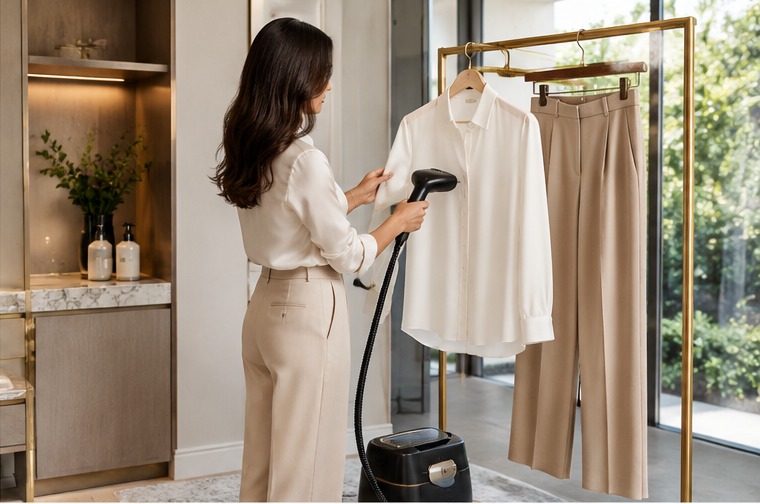
Give tailored pieces breathing space between wears. Brush away surface dust, air them out and use gentle steaming when appropriate. Follow the garment’s professional-cleaning instructions rather than treating a suit like everyday cotton.
Cotton shirts
Wash according to the label, avoid unnecessary heat and hang promptly. Treat collars, cuffs and underarm areas early rather than repeatedly increasing wash intensity.
Silk & delicate fabrics
Delicate fibres deserve extra attention. Check the label before washing, avoid improvised stain treatments and use professional care where the garment specifies it.
Knitwear
Shape knitwear while damp and follow the label regarding flat drying. Hanging a heavy wet knit can distort the shoulders and overall silhouette.
5. Small Habits That Extend Wear
The most effective wardrobe-care routine is often made up of small actions that take less than five minutes.
- Rotate your favourites. Give frequently worn pieces time to rest between wears when practical.
- Use proper hangers. Broad, supportive hangers are useful for structured garments.
- Empty pockets before laundry. Pens, tissues, coins and receipts can create avoidable problems.
- Spot-clean early. Small marks are easier to address before they sit in the fabric.
- Air garments after a long day. Do not automatically put every worn item straight into the wash basket.
- Store clean clothes with space. Crowding can cause unnecessary creasing and make fabrics harder to breathe.
6. When to Repair or Replace
Good care can extend the useful life of a garment, but it cannot prevent every type of wear. Before replacing a favourite piece, inspect whether the problem is actually repairable.
| What you notice | Possible next step |
|---|---|
| Loose button | Repair rather than replace |
| Small seam opening | Consider a professional alteration or repair |
| Persistent stain | Seek appropriate stain treatment before repeated washing |
| Loss of shape | Review hanger, drying and storage habits |
| Severe fabric thinning or damage | Replacement may eventually be necessary |
The goal is not to keep every garment forever. It is to avoid replacing a perfectly usable garment simply because its care routine has been too aggressive.
7. Your 30-Second Wardrobe Check
Before you put your work clothes away tonight, run through this quick checklist. Tap each card to reveal the reminder.

01 · Is it actually dirty?
Tap me.
Refresh first
If it only needs airing or a light refresh, a full wash may not be necessary.

02 · Is it wrinkled?
Tap me.
Steam smart
For suitable garments, gentle steaming can help refresh the appearance without a complete wash.

03 · Is there a small mark?
Tap me.
Act early
Address small stains according to the fabric and care label instead of letting them become set-in marks.

04 · Where will it live?
Tap me.
Store properly
Choose the right hanger or folded storage method and give garments enough space.
8. Frequently Asked Questions
How often should work clothes be washed?
There is no single schedule for every garment. Consider the fabric, how the garment was worn, perspiration, visible marks and the care label. Some pieces may need only airing or refreshing between wears.
How can I keep a blazer looking fresh without washing it frequently?
Air it after wear, use a suitable hanger, brush away surface debris and consider gentle steaming when the care instructions allow it. Professional cleaning may be appropriate for certain tailored garments.
Why do my work shirts look old even though they are not very old?
Frequent washing, friction, heat, over-drying, harsh treatment and poor storage can all contribute to a tired appearance. Review the full care routine rather than only changing detergent.
When should I use professional laundry or dry-cleaning care?
Follow the garment's care label. Structured tailoring, delicate fibres and garments marked for professional cleaning should be handled according to those instructions.