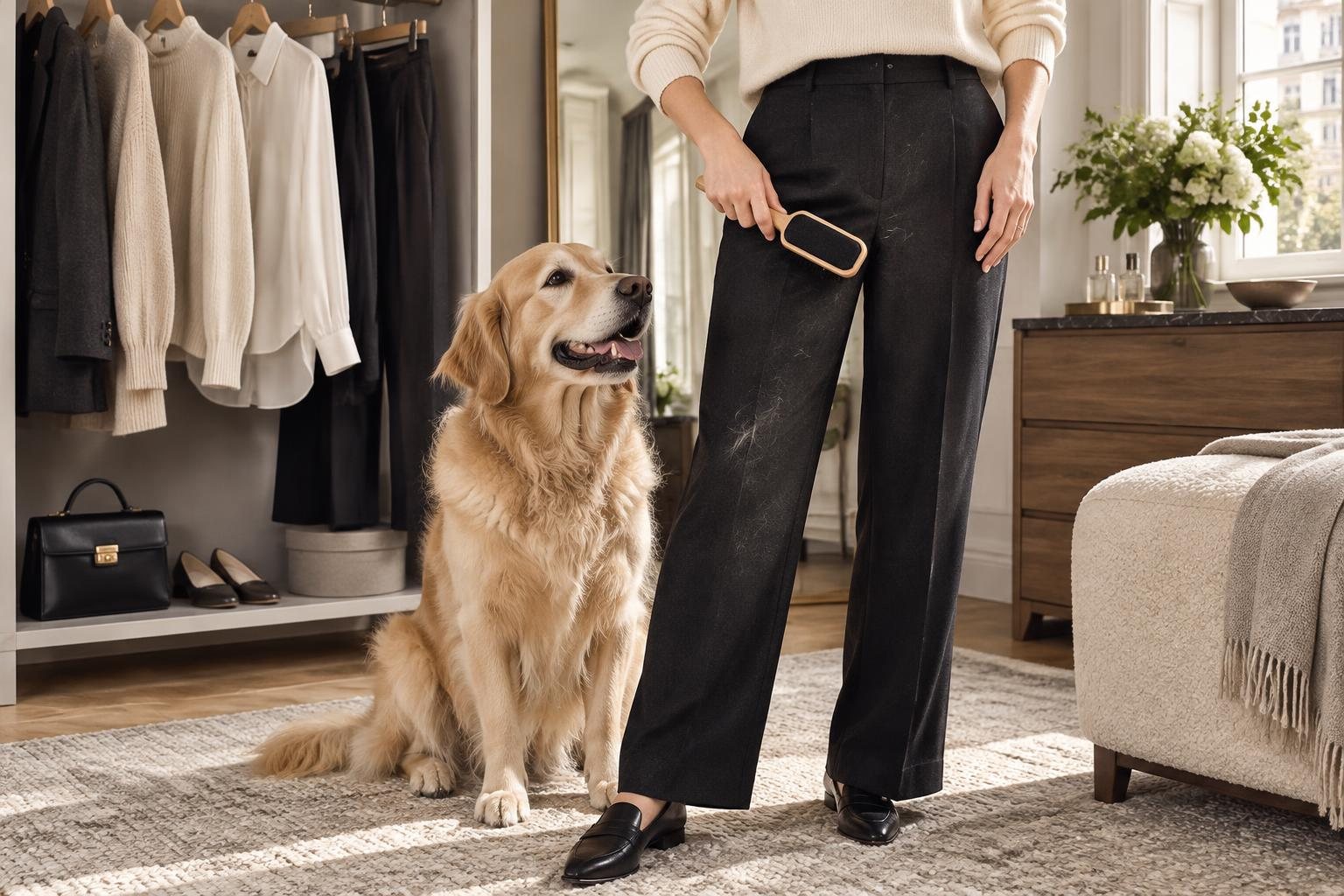
A tailored black trouser. A camel coat. A cashmere knit in soft oatmeal. For anyone who shares a home with a golden retriever, a ragdoll or a spaniel, the same ritual plays out each morning: a last look in the mirror, and the quiet discovery that your companion has already chosen your outfit’s finishing detail.
Pet hair is not a sign of a poorly kept wardrobe. It is the cost of an affectionate home. But with the right tools, a considered routine and an understanding of fabric, you can keep even your finest pieces looking composed — without damaging the cloth you are trying to protect.
Why pet hair clings
Fine pet hair is shaped to catch. It lodges in the loops of knitwear, the nap of wool and the weave of tailoring, and static from dry indoor air makes it hold on. Dark fabrics show light hair; pale fabrics show dark hair. Many pets also shed more as the weather warms and winter coats give way to lighter ones, so a Melbourne spring and summer can bring a noticeable increase.
The most effective approach is layered: reduce hair at the source, remove it before it settles, and prevent it from reaching your wardrobe in the first place.
Start at the source
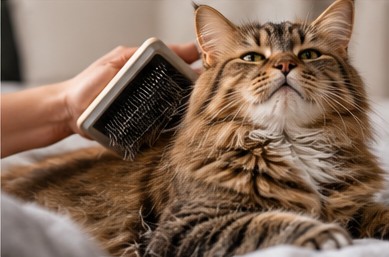
Regular grooming is the single most effective way to reduce hair on clothing. A few minutes with a brush suited to your pet’s coat — ideally outdoors — removes loose hair before it reaches the sofa, the bed or the back of your trousers. Ask your groomer or vet which tool suits your pet’s coat and skin.
Then give your pet a place of their own. A washable throw on the sofa, a dedicated bed and a quick shake-out of the blanket they favour all keep hair on surfaces you can launder easily, rather than on your wardrobe.
The right tool for the right fabric
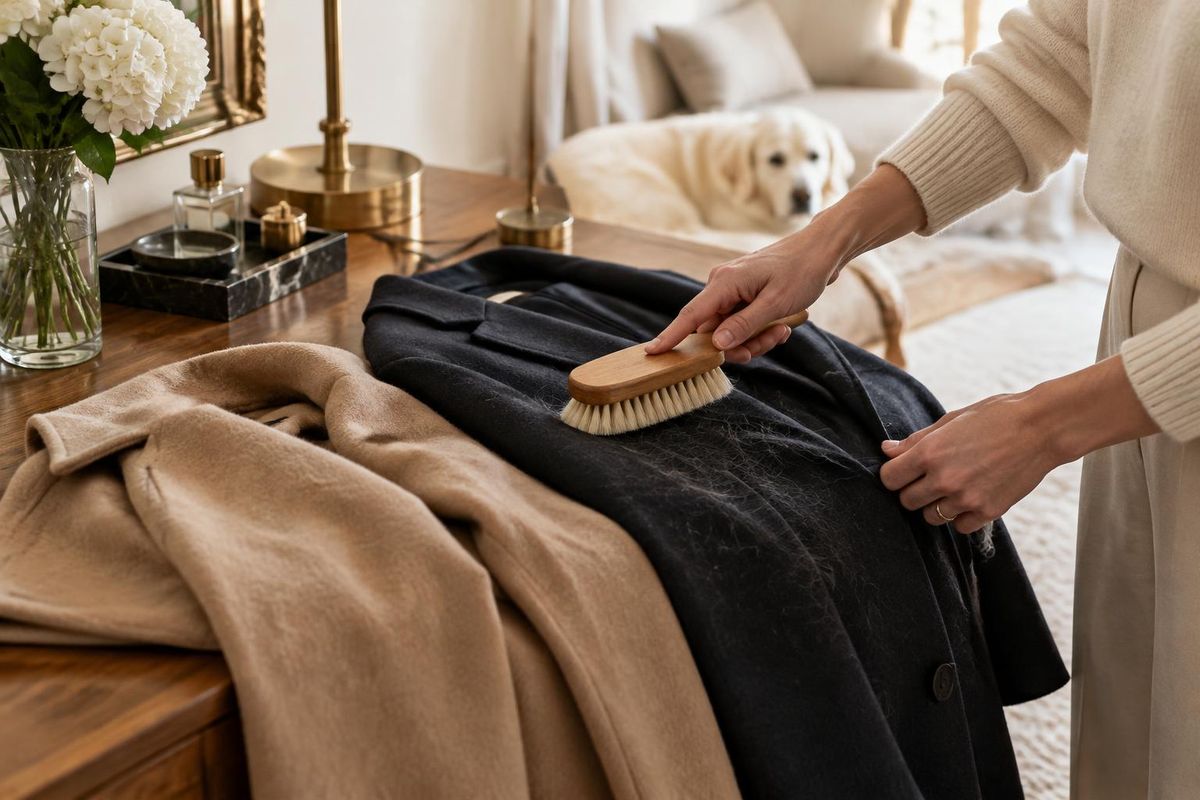
Not every tool belongs on every garment. A sticky roller that works perfectly on a cotton shirt can snag fine knits or leave a faint residue on cashmere. Test first, work gently and follow the fibre.
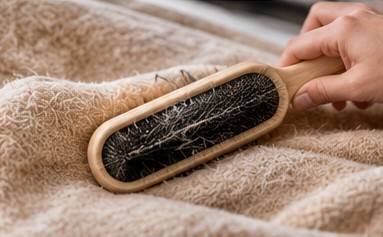
- Natural-bristle garment brush: the classic for wool coats and tailoring. Brush lightly in the direction of the nap, then shake the garment out.
- Rubber or pet-hair brush: excellent for upholstery-weight fabrics and durable knits; it gathers hair into a ball you can lift away.
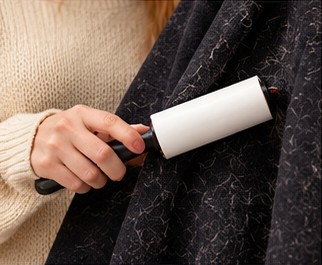
- Lint roller or tape: a fast finish for smooth cotton, denim and synthetics. Use light pressure and change the sheet often.
- Slightly damp hands or a damp rubber glove: draws hair together on sturdy fabrics. Avoid it on silk, delicate finishes or anything water-marking.
In the wash: lift hair out, not in
Putting a hair-covered garment straight into the machine is one of the most common mistakes. Hair loosens in the wash, then migrates onto everything else in the drum — and reattaches as the load dries.
- Brush or roll first. Remove as much hair as you can while the garment is dry.
- Shake it out. Outdoors, give each piece a brisk shake to release what is left.
- Separate the load. Wash heavily furred items — pet throws, towels — apart from clothing.
- Check the label. Follow the recommended cycle and temperature. Do not wash dry-clean-only pieces to remove hair.
- Clean the filter. Empty the machine’s lint and hair filter after each load, and wipe the drum.
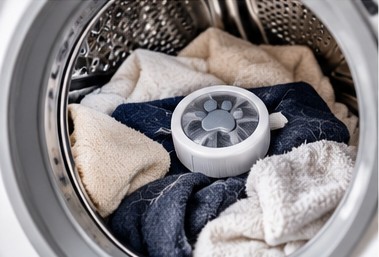
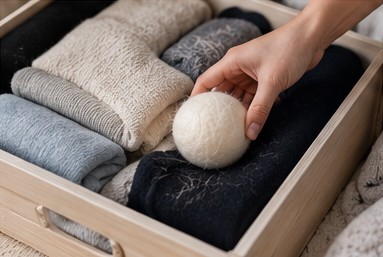
A reusable pet-hair catcher in the drum, or a short air-only tumble before washing (where the label allows), can help loosen hair so it collects in the lint trap rather than on your clothes. Wool dryer balls can also help during a low-heat tumble finish.
Storage: where hair stops arriving
Many wardrobe hair problems are really storage problems. Garments left on the bed, the chair or an open rail collect hair the moment a pet wanders past.
- Close the door. A shut wardrobe and a closed bedroom door do more than any roller.
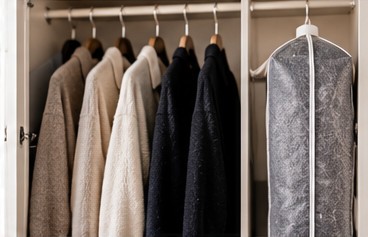
- Use breathable garment bags. They protect coats, tailoring and knitwear without trapping moisture.
- Fold knitwear in drawers. Hanging stretches knits; drawers keep them clean and shaped.
- Keep a brush by the door. A thirty-second pass before leaving the house is easier than a rescue later.
A considered care guide
| Piece | First step | Avoid |
|---|---|---|
| Wool coats & tailoring | Soft natural-bristle brush, with the nap | Washing; hard scrubbing |
| Cashmere & fine knits | Gentle brush; test first | Sticky rollers; pressure |
| Cotton, denim & synthetics | Rubber brush or lint roller | Heat before hair is removed |
| Silk & special-care pieces | Light shake; seek assessment | Improvised treatments |
Frequently asked questions
Does washing remove pet hair?
It can loosen it, but hair often clumps, clings to other items or reattaches in the dryer. Removing the bulk of it first makes washing far more effective.
Can I use a lint roller on cashmere?
With caution. A sticky roller can snag fine fibres or leave residue, so a soft brush is usually kinder. Test on an inside area first, and ask a specialist if the piece is valuable.
Will dry cleaning remove pet hair?
Professional cleaning can help, but it is not guaranteed to remove every hair. Brush the garment beforehand and let your cleaner know it has been exposed to pets.
Does Dryz collect across Australia?
Dryz advertises pickup and delivery in Melbourne. Check your postcode on its website; nationwide collection is not established by this guide.
Beautifully kept, pet hair and all
Sharing your life with a pet and wearing beautiful clothes are not in conflict. A little preparation, the right brush and thoughtful storage keep your wardrobe polished without keeping your companion out of the room.
Dryz offers Melbourne pickup-and-delivery dry cleaning and laundry, including wash-and-fold and wash-and-iron services. Check your postcode and ask about the specific garment before booking. For wool coats, cashmere and other special-care pieces, brush off loose hair beforehand, share the care label and mention pet exposure so the team can advise on suitable handling. No service can promise every hair will disappear, but considered care makes a visible difference.