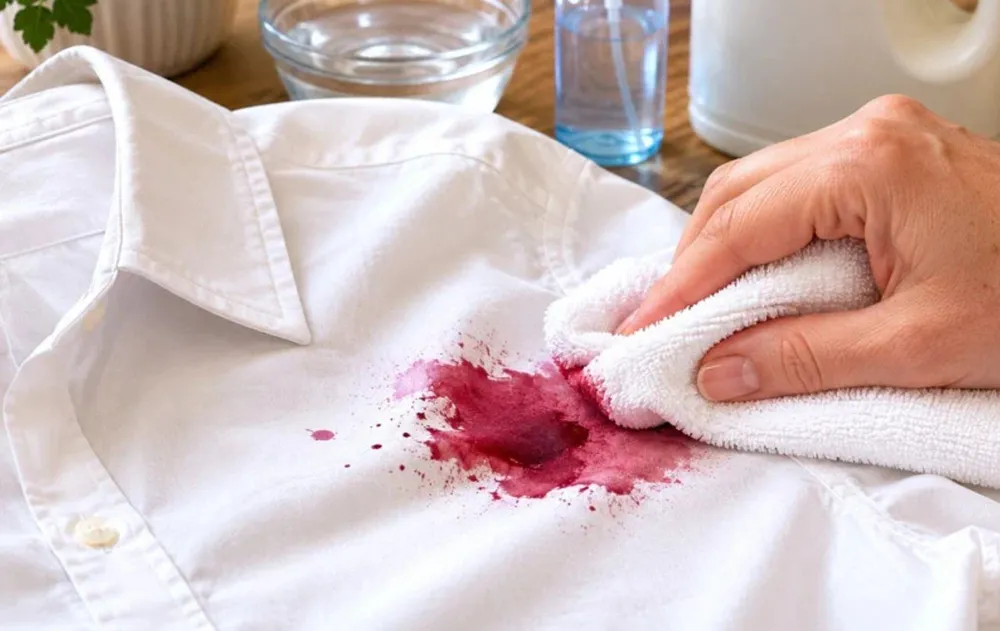
A stain can happen in seconds. A splash of coffee on a work shirt, a little oil at dinner, or a wine spill on your favourite top can turn a perfectly good outfit into a laundry problem. The frustrating part is that the wrong stain-removal method can do more damage than the stain itself.
The safest approach is simple: identify the stain, check the care label, treat it gently and avoid heat until you know the mark is gone. You do not need a cupboard full of complicated products. You need the right treatment for the type of stain and the fabric.
This guide covers some of the most common clothing stains and explains what you can safely try at home — plus when it is better to stop experimenting and let a professional cleaner handle it.
The 5 golden rules of stain removal
Before reaching for detergent, remember these five rules. They prevent most of the mistakes that turn a small accident into a permanent mark.
- Act quickly. Fresh stains are generally easier to remove than stains that have had time to dry and bond with the fibres.
- Blot instead of rubbing. Rubbing can spread the stain and work it deeper into the fabric.
- Use cool water first when you are unsure. Hot water can set some protein-based stains and can make some treatments harder to reverse.
- Test a treatment on a hidden area. This is especially important for coloured garments and unfamiliar fabrics.
- Never tumble-dry a stained garment until you have checked the result. Heat can make leftover staining much harder to remove.
1. Coffee and tea stains
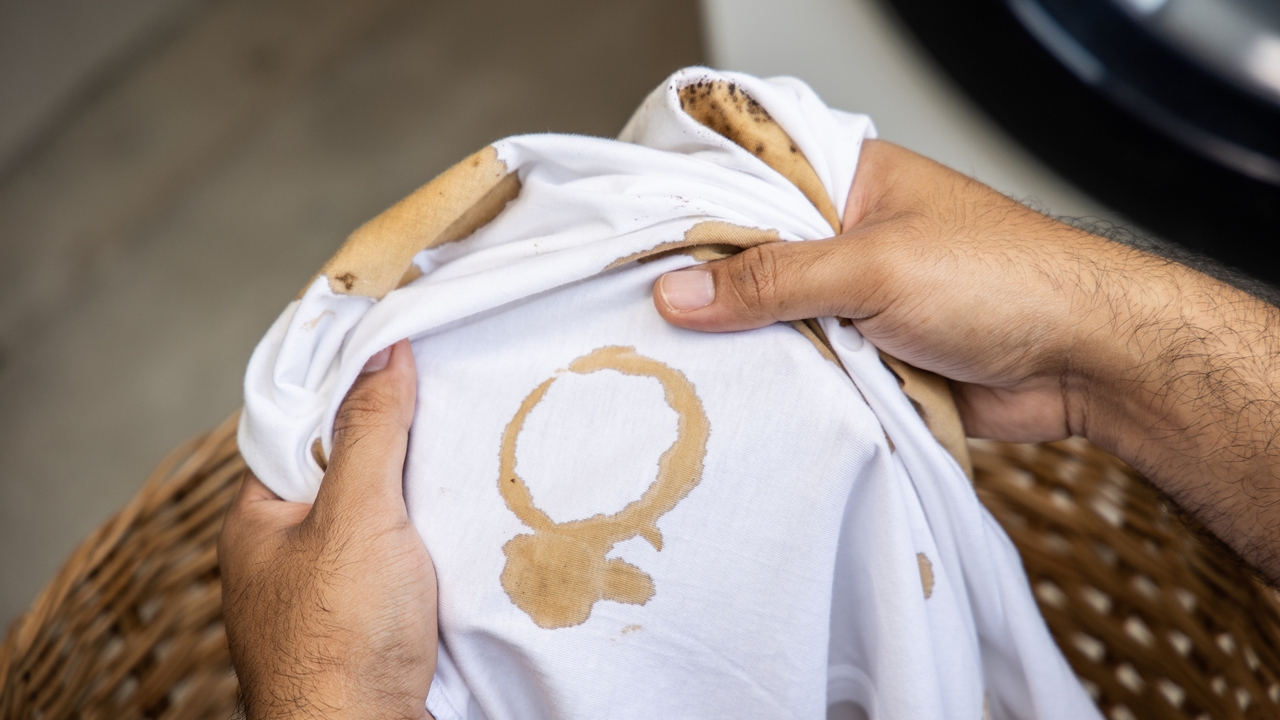
Coffee and tea are among the most common clothing stains because they happen when we are rushing — usually right before work or while travelling. The good news is that a fresh spill on a washable fabric can often be treated before it sets.
What to do
- Gently blot excess coffee with a clean cloth or paper towel. Do not scrub.
- For a washable garment, flush the stain with cool water, ideally from the back of the fabric.
- Apply a small amount of liquid laundry detergent or a suitable pre-wash stain remover.
- Let the product work according to its label, then wash using the garment's care instructions.
- Check the stain before drying. If it is still visible, repeat the treatment rather than adding heat.
2. Red wine stains
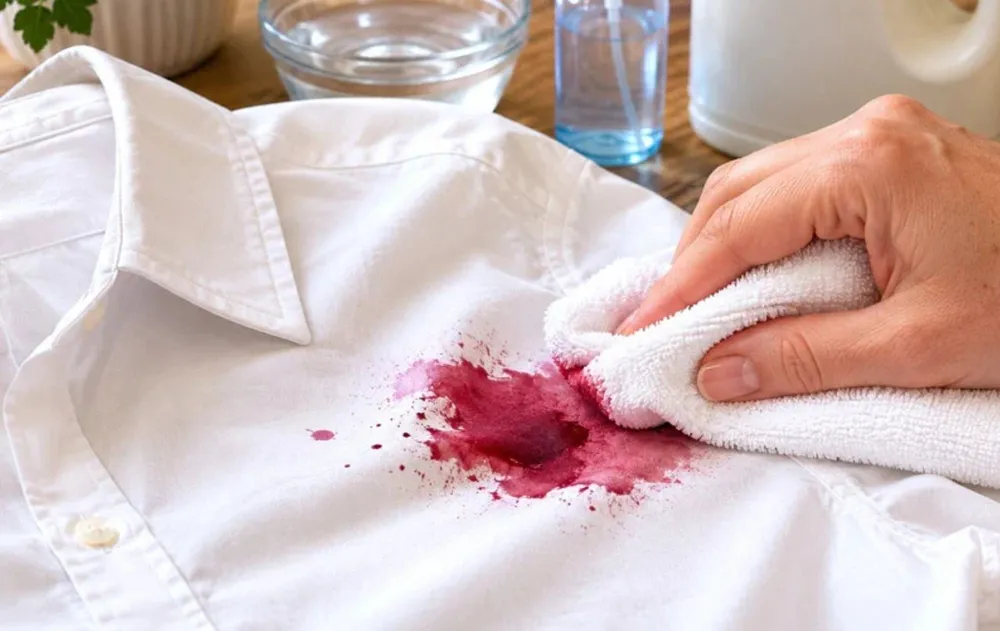
Red wine looks dramatic on white clothing, but panic usually makes things worse. Scrubbing can spread the pigment, while heat can make a remaining stain more difficult to remove.
What to do
- Blot the spill immediately with a clean, absorbent cloth. Work from the outside toward the centre.
- For a washable fabric, rinse gently with cool water from the back of the stain.
- Apply a suitable liquid laundry detergent or fabric-safe pre-treatment.
- Wash according to the care label and inspect the garment before drying.
3. Oil and grease stains
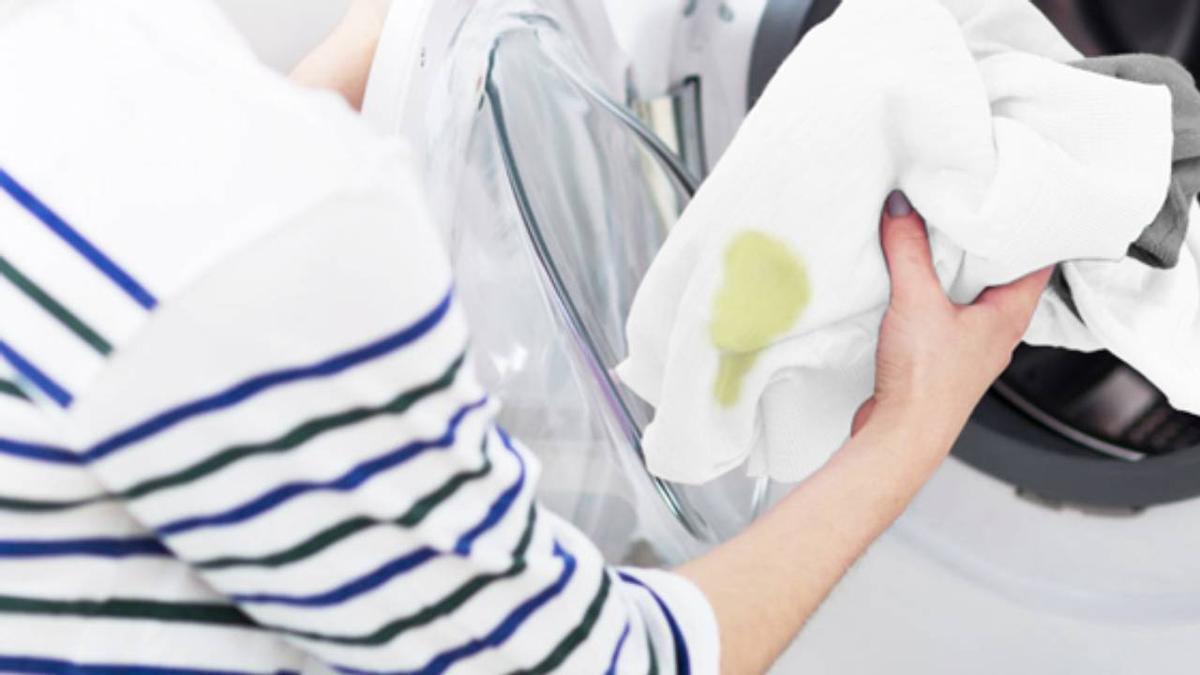
Cooking oil, butter, sauces and greasy food leave a different kind of mark because the stain is oil-based. The key is to remove the excess first and use a product designed to break down oily residue.
What to do
- Blot excess oil with a paper towel or clean cloth. Avoid rubbing it outward.
- For washable, colourfast fabrics, apply liquid laundry detergent or a fabric-safe pre-wash product to the affected area.
- Leave it for the time recommended on the product label.
- Wash at the warmest temperature permitted by the care label.
- Inspect before drying. If you can still see the greasy mark, repeat the treatment.
Do not use this method blindly on silk, wool, suede, leather or dry-clean-only garments. These materials need a fabric-specific approach.
4. Makeup and foundation stains
Foundation, concealer and lipstick can contain oils, waxes and pigments, so simply rinsing them with water may not be enough. Start gently — especially on dark or delicate fabrics.
What to do
- Lift off any excess product with the edge of a spoon or a clean, dull tool. Do not smear it further into the fabric.
- For a washable garment, apply a small amount of liquid laundry detergent to the stain.
- Gently work the product into the area with your fingers rather than aggressively scrubbing.
- Rinse and wash according to the care label.
- Check the garment before drying.
If the garment is silk, wool, heavily structured or dry-clean-only, professional cleaning is the safer route. Strong solvents and home remedies can affect colour, texture or finish.
5. Sweat and deodorant stains

Yellowing around collars and underarms is often a combination of sweat, body oils and product residue. These marks can be stubborn, particularly when they have built up over time.
What to do
- Pre-treat the affected area with liquid laundry detergent or a suitable stain remover.
- Allow the product to sit for the recommended time.
- Wash at the warmest temperature permitted by the care label.
- For white or colourfast garments, an oxygen-based laundry product may be appropriate if the care label allows it.
- Air-dry while you check the result. Do not rely on the dryer to “finish the job”.
6. Ink and pen stains

Ink is one of the stains where a DIY attempt can quickly become risky. Different inks behave differently, and solvents that work on one garment can affect dyes or finishes on another.
The safest approach
- Blot gently if the ink is still wet. Avoid spreading it.
- Do not put the garment in the dryer.
- Check the care label and fabric composition.
- For valuable, delicate or dry-clean-only garments, take the item to a professional cleaner and tell them what caused the stain if you know.
For inexpensive, washable garments, a fabric-safe stain remover may be worth trying after a hidden-area test. If you are considering rubbing alcohol or another solvent, check the garment and product guidance first rather than assuming it is safe.
When you should not try DIY stain removal
Sometimes the most fabric-friendly decision is to stop before you start. Professional cleaning is worth considering when:
- The care label says dry clean only.
- The garment is made from silk, wool, velvet, suede, leather or another delicate material.
- The stain is on a tailored suit, formalwear, structured jacket or expensive garment.
- You do not know what caused the stain.
- The stain has already been through a dryer or has been sitting for a long time.
- You have already tried several products and the fabric is starting to change colour or texture.
7 stain-removal mistakes that can ruin clothes
| Common mistake | Why it can cause problems | Better approach |
|---|---|---|
| Scrubbing hard | Can spread the stain and damage fibres. | Blot and treat gently. |
| Using heat too soon | Can make remaining staining harder to remove. | Check the garment before tumble-drying. |
| Ignoring the care label | The treatment may be unsuitable for the fabric. | Read the label first. |
| Using too much product | May leave residue or affect the fabric. | Follow the product directions. |
| Mixing chemicals | Can create dangerous reactions or damage clothing. | Use one suitable product at a time. |
| Trying every internet hack | Acids, solvents or abrasive powders can damage some fibres and dyes. | Choose a method designed for the stain and fabric. |
Frequently asked questions
The bottom line: treat the stain, protect the garment
Good stain removal is not about using the strongest product or the most complicated internet hack. It is about acting early, using the right treatment, respecting the fabric and avoiding heat until the stain is gone.
And if a favourite garment is too delicate, too valuable or too badly stained for a home experiment, that is exactly when professional cleaning makes sense. For customers in Melbourne, Dryz offers convenient pickup and delivery for dry cleaning and laundry, so you do not have to spend your day trying to rescue a difficult garment at home.