
The golden retriever who claims the best spot in the house. The spaniel curled into a bed beside the linen cupboard. In a beautifully kept home, pets are family — and their bedding quietly collects what a family collects: hair, dander, saliva, skin oils, outdoor dust and the occasional spill.
That is why a pet bed can start to smell long before it looks dirty. The aim is not a perfumed cover-up. It is a genuinely clean, fully dry, fragrance-free surface that suits sensitive noses — theirs and yours — and keeps the textures of your home looking considered.
Why pet bedding smells
Odour is usually the sum of several small things: bacteria feeding on skin oils and saliva, damp that never fully left the filling, detergent residue trapped in dense fibres, and — in some homes — accidents that soaked below the surface. Warm Australian summers speed all of it up, particularly for pets who sleep outdoors or come in from the garden or beach.
A regular wash rhythm matters more than an occasional heroic one. For most households, a weekly to fortnightly wash of covers and blankets is a sensible baseline, with more frequent washing after an accident, a swim, a skin flare-up or a muddy week.
Before you wash: remove, read, pre-treat
Machines are not designed to cope with a season’s worth of fur. Packed into the drum, hair clumps, clings to fabric and ends up in your filter and drain. A few quiet minutes first make the wash far more effective.
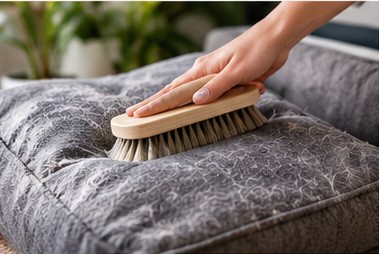
- Remove loose hair. Shake the bed outdoors, then use a vacuum upholstery tool or a soft bristle brush working in one direction.
- Read the care label. Note whether the cover is removable, the permitted temperature and whether the filling is machine washable.
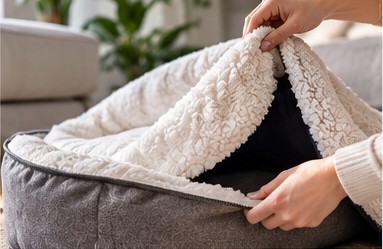
- Separate the layers. Unzip covers and take out liners or inserts so water can reach every surface.
- Spot-treat accidents. Blot — do not rub — then apply an enzyme-based pet stain and odour cleaner as directed, after testing on a hidden area.
The wash: gentle, thorough, fragrance-free
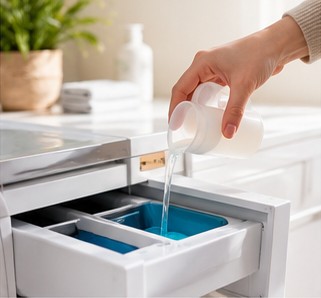
A pet’s sense of smell is far more acute than ours, and some products that smell lovely to us are not kind to them. Choose a mild, fragrance-free detergent and measure it carefully — too much leaves residue in thick fibres that can irritate skin and hold odour.
- Temperature: where the label allows, a warm to hot wash works harder on odour-causing bacteria and dust mites. If the label says cool, honour the label.
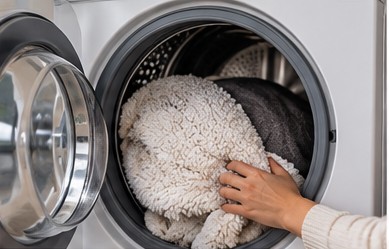
- Load size: give the bed room to move. An overloaded drum cannot rinse properly, and that is how residue — and smell — stays behind.
- Extra rinse: add one if your machine offers it, particularly for plush or sherpa-style fabrics.
- Softener: best avoided. It can leave a film on fibres and may irritate sensitive skin.
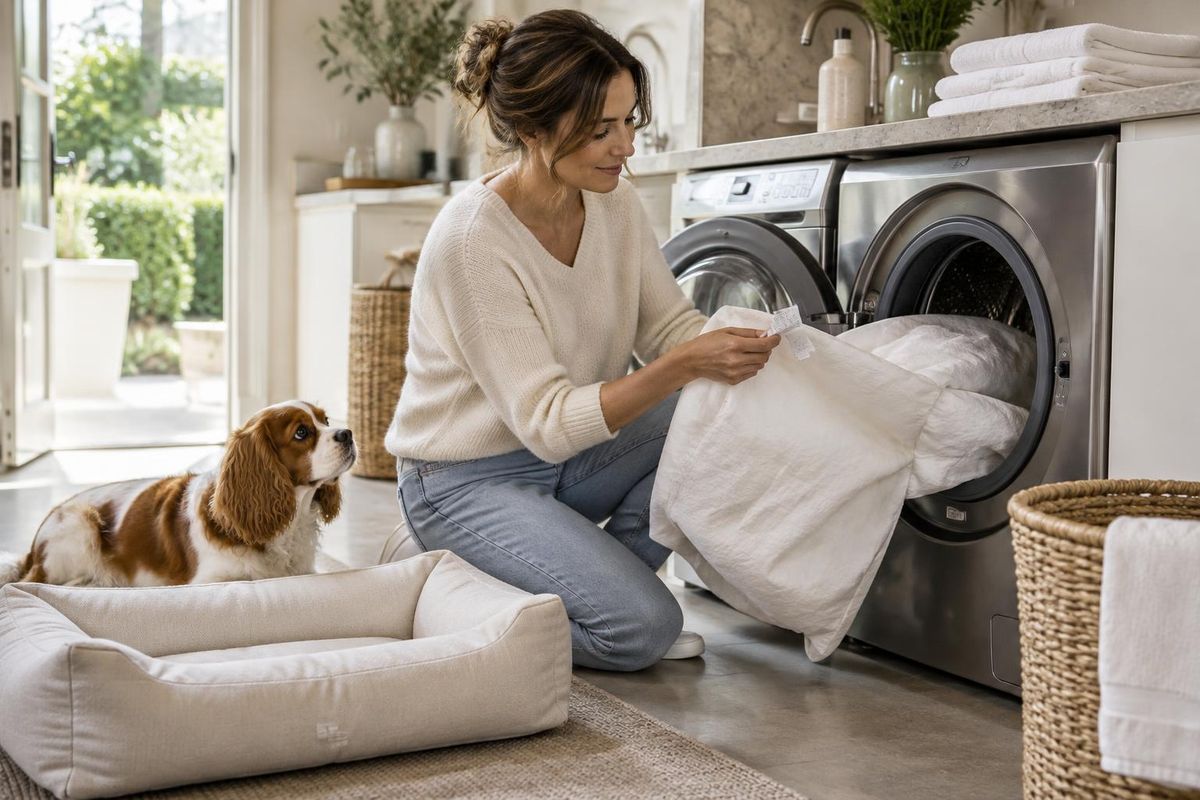
Drying: where most odours are won or lost
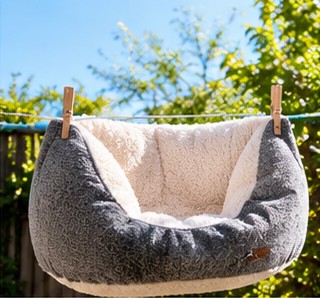
A bed that feels dry on the surface can still hold dampness in its seams or filling, and that is where a stale, musty smell begins. Dry everything completely before it returns to the floor.
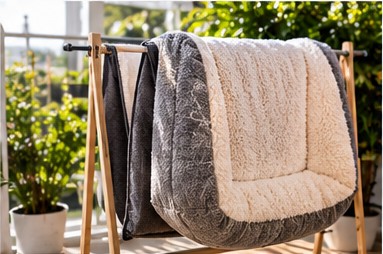
Where the label permits, a low-heat tumble cycle is excellent for fluffing and finishing; otherwise, dry in shade with good airflow. Direct summer sun can fade dark fabrics and stiffen delicate ones, though a brief spell of fresh air is a lovely finishing touch for hardy covers. Shake or brush the surface once dry to lift any remaining hair.
Between washes: keep it fresh
- Brush and vacuum weekly. Loose hair and dander hold odour; removing them is the easiest refresh there is.
- Air the bed. Stand it in a ventilated spot for an hour on a dry day.
- Rotate two covers. Keeping a spare means a wash never leaves your pet without a clean, dry bed.
- Place it well. Away from damp corners, cool-air vents and direct afternoon glare.
- Wash the surroundings. Rugs, throws and the nearby sofa blanket carry the same odours.
Occasionally, run an empty hot cycle if the label of your machine suggests it, and clear the lint and hair filter. It protects the machine and keeps hair out of your own laundry.
A considered care guide
| Item | First step | Avoid |
|---|---|---|
| Removable covers | Brush off hair; wash to the label | Heavy detergent; overloading |
| Whole machine-washable beds | Vacuum; wash alone with room to move | Skipping the extra rinse |
| Memory foam & orthopaedic cores | Wash cover; spot-clean core | Machine washing; soaking |
| Blankets & throws | Shake out; wash separately | Fabric softener; storing damp |
When to look beyond laundry
If a bed still smells after a thorough wash and complete drying, consider whether the odour is coming from the pet rather than the bedding. Persistent smell, scratching, redness or ear discomfort are worth a conversation with your vet — a clean bed will not fix what is happening on the skin.
Frequently asked questions
Can I wash a pet bed in the washing machine?
Often, yes — but only if the care label says so and the bed fits comfortably in the drum. Removable covers are usually straightforward; foam cores generally are not.
Why does it still smell after washing?
The usual causes are damp filling, too much detergent, or an accident that soaked deeper than the cover. Try a second rinse, an enzyme-based treatment where suitable, and a longer, fully dry finish.
Is fabric softener safe for pet bedding?
It is best avoided. Softener can leave a residue that holds odour and may bother sensitive skin. A fragrance-free detergent and an extra rinse are the simpler choice.
Does Dryz collect pet bedding?
Dryz advertises pickup and delivery in Melbourne. Bulky pet beds and foam-filled items may not suit every service, so check your postcode and ask about the specific item before booking.
A home that feels as good as it looks
Caring for pet bedding is part of caring for the whole household textile wardrobe — the throws, blankets and linens your pets share with you. A consistent routine keeps each piece fresh without harsh products or guesswork.
Dryz offers Melbourne pickup-and-delivery dry cleaning and laundry, including wash-and-fold and wash-and-iron services. Check your postcode, and ask about the specific item before booking. For bedding, blankets and throws that have been shared with a pet, share the care label and let the team know what the piece has encountered so they can advise on suitable handling. Never assume every bulky or foam-filled item suits ordinary wash-and-fold processing.