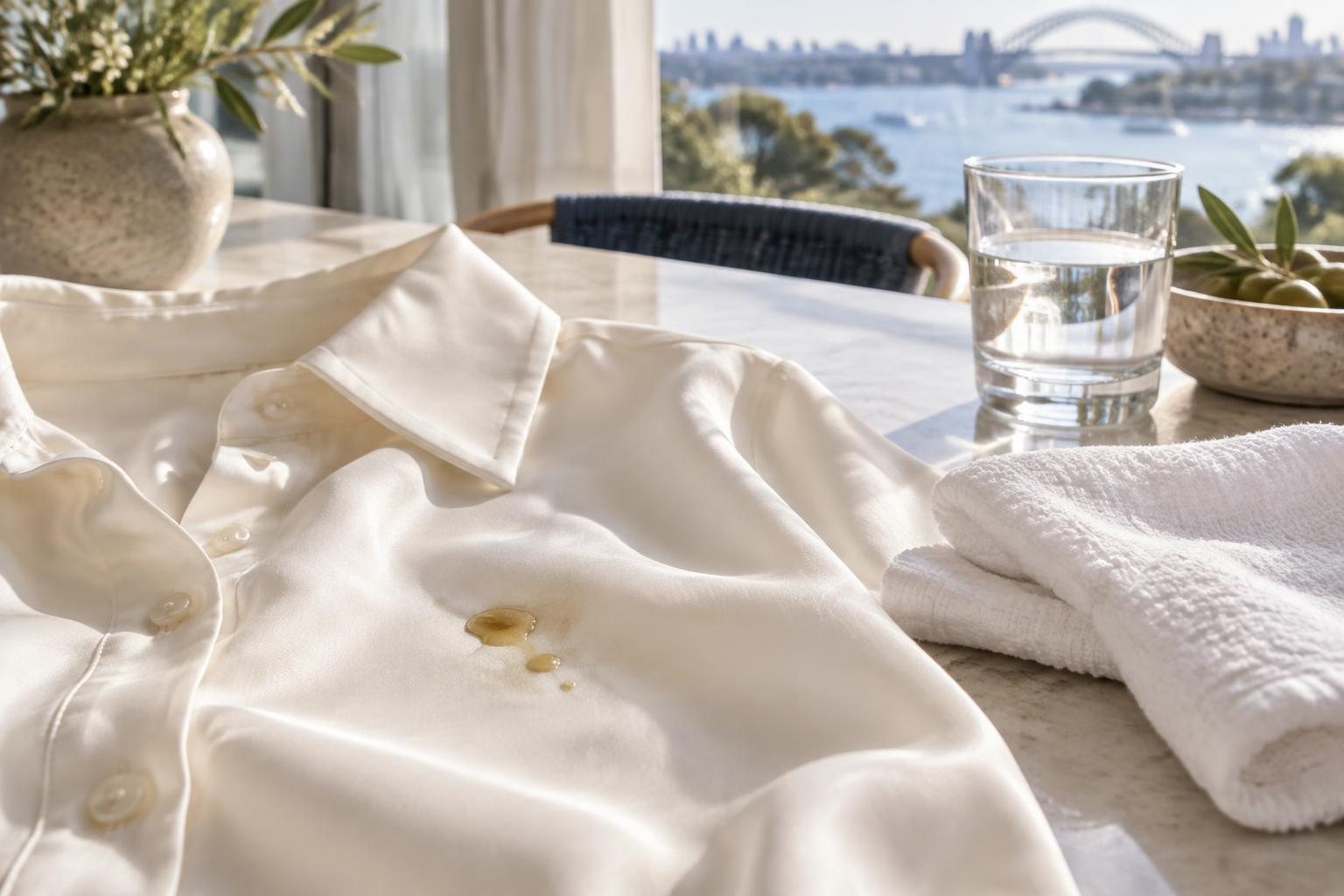
A long lunch on the harbour. A generous drizzle of olive oil. A single drop lands on a favourite shirt, and a few days later, after a full wash, the shadow is still there, paler and slightly yellow.
Oil is one of the most persistent marks a wardrobe will meet. It does not rest on the surface of the fabric; it settles between the fibres, and an ordinary cycle often moves it around rather than removing it. The encouraging part is that a stain which has survived the wash is not necessarily permanent. With the right order of steps, and patience, many oil stains can still be lifted.
Why oil survives the wash
Oil repels water. A standard wash relies on water and detergent to carry soil away, but a concentrated oil spot can resist both, particularly in a cold or short cycle. What remains is often invisible when the garment is wet and appears as a dull, yellowish shadow once it dries.
Over time, residual oil oxidises and darkens, which is why an old, forgotten stain looks worse than the original. Heat accelerates this. A tumble dryer or a hot iron can bond the oil into the fibres, and that is usually the moment a garment is wrongly written off.
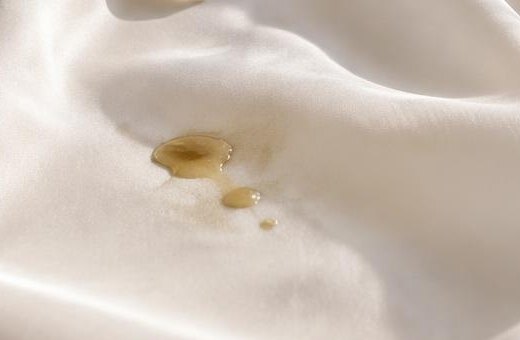
Act on a fresh stain: six considered steps
The sooner you act, the better the result. Before anything else, check the care label. The method below suits washable cotton, linen and many blends; delicate and special-care fabrics are covered in the fabric guide further on.
- Note the fabric and the cause. Cooking oil, salad dressing and pizza grease all respond to the same approach, but the fabric decides how firmly you can treat it.
- Blot, never rub. Press a clean paper towel or white cloth onto the stain and lift. Repeat with a fresh section each time. Rubbing pushes oil deeper and widens the mark.
- Absorb the excess. For a larger spot, cover it with a light layer of cornflour or bicarbonate of soda for 15 to 30 minutes, then brush it away gently.
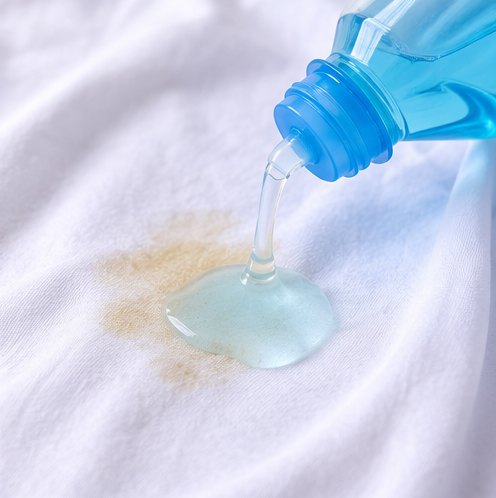
- Dissolve with dishwashing liquid. Apply a small drop of clear dishwashing liquid directly to the stain, work it in softly, and leave it for 10 to 15 minutes.
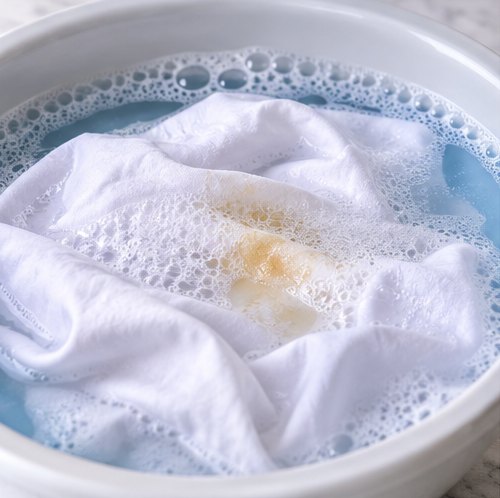
- Wash or soak warm. Launder at the warmest temperature the care label allows, or soak in warm soapy water first.
- Inspect, then air dry. Check the garment in daylight while it is still damp. If any shadow remains, repeat. Dry only once it has gone.
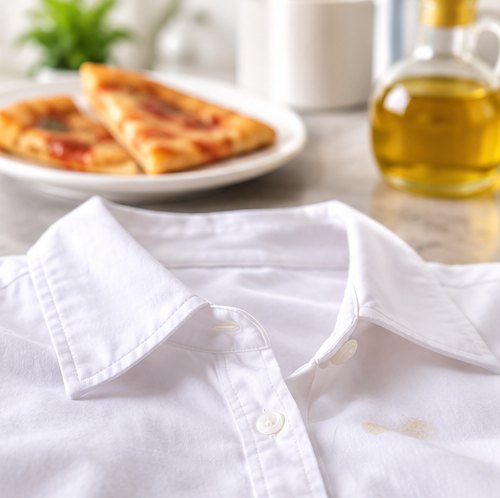
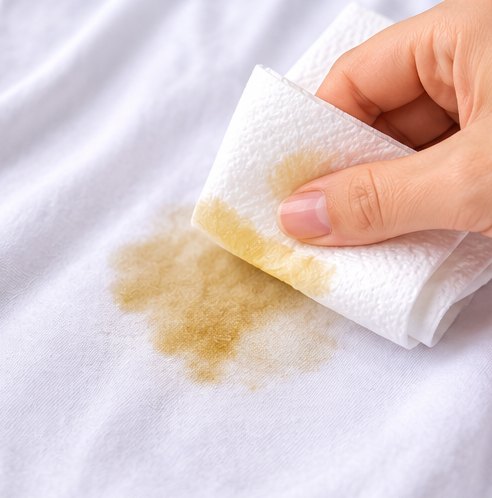
If it is still there after washing
This is the situation most guides skip. If a stain has been through a wash, or even the dryer, begin again with patience. Oil that has been set by heat usually needs a firmer, more repeated approach rather than a stronger chemical.
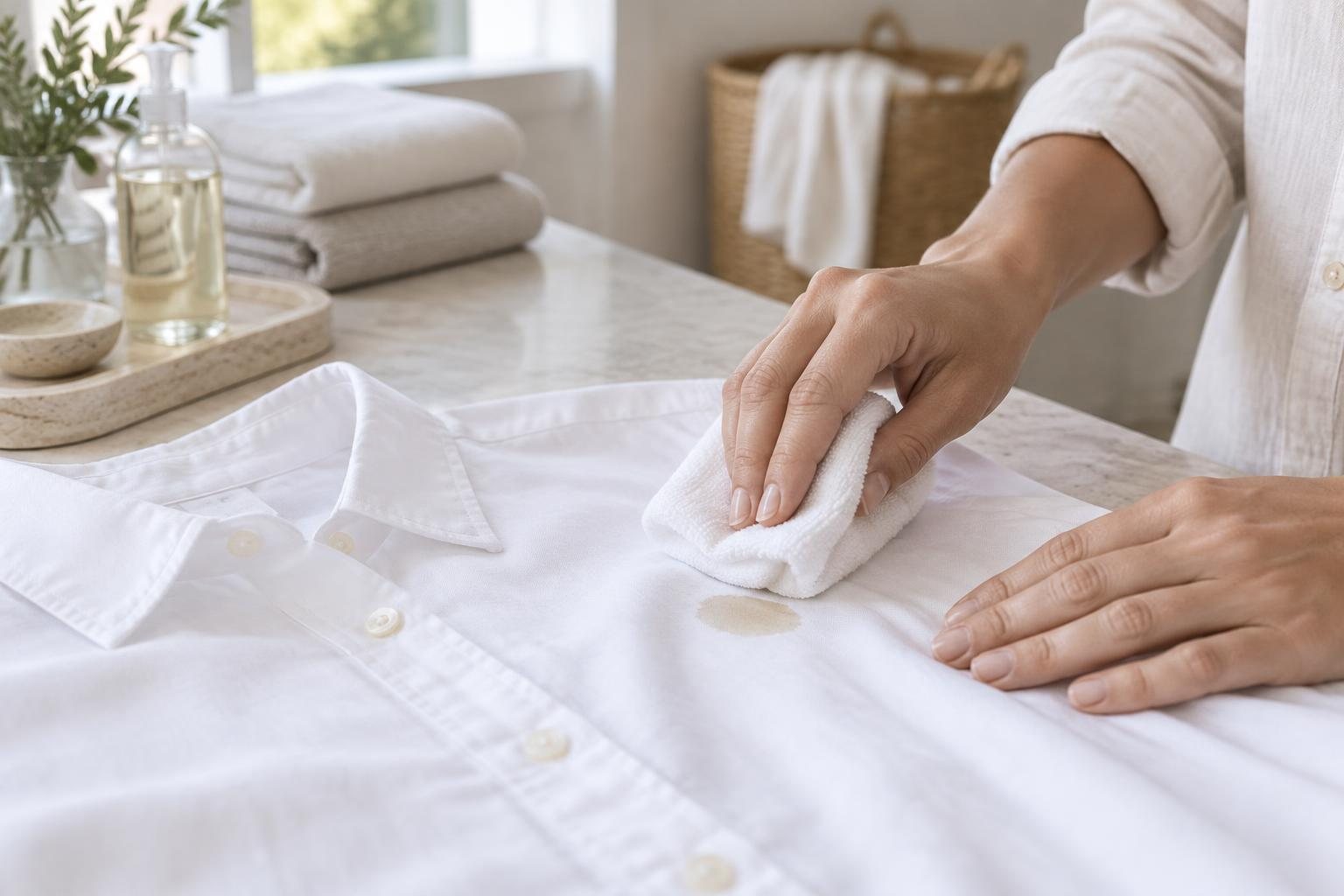
- Re-treat while dry. Apply dishwashing liquid directly onto the dry stain and work it in gently. Leave for 30 minutes, or overnight for an older mark.
- Rewash warm. Use the warmest water the care label permits, with your usual detergent. Wash the garment on its own.
- Inspect while wet. Check in daylight. A faint shadow means repeating the first two steps; two or three rounds are not unusual.
- Brighten white cotton if needed. If a yellow halo lingers on white, colourfast cotton or linen, an oxygen-based stain remover may help. Follow the product instructions and test on a hidden seam first.
- Keep heat away. Air dry until the stain has fully gone.
Know your fabric first
Dishwashing liquid and warm water suit sturdy cotton and linen. The finer the fabric, the more cautious the approach. The care label, not the purchase price, decides what is appropriate.
| Fabric | First step | Avoid |
|---|---|---|
| Cotton & linen | Blot, absorb, dishwashing liquid, warm wash | Dryer before the stain is gone |
| Polyester & blends | Treat early; gentle warm wash | High heat, which holds oil firmly |
| Silk & satin | Blot gently; seek an assessment | Soaking, rubbing, bleach and DIY solvents |
| Wool & cashmere | Blot and absorb; seek an assessment | Agitation, which can felt the fibres |
| Tailoring & dry-clean-only | Do not treat at home; keep the garment flat | Water, dishwashing liquid and rubbing |
Mistakes that set oil for good
- Rubbing instead of blotting. It spreads the oil and can damage fine fibres.
- Using the dryer to “check” the result. Heat sets oil. Always inspect while damp.
- Starting with water. Absorb and dissolve before wetting the area.
- Reaching for strong chemicals. A stronger product is not a better one for delicate fabric.
- Waiting too long. The longer oil sits, the more it oxidises and darkens.
Protecting your clothes at the table
The most elegant solution is prevention. A napkin across the chest or lap, a quick blot the moment a drop lands, and a note of the spot for later will make treatment far easier. Where an oil mark goes unnoticed until the next day, the steps above still apply; simply begin with absorbing and dissolving before any wash.
When to ask a professional
Some garments are too valuable to experiment on. If the piece is silk, cashmere, structured tailoring, embellished or labelled dry clean only, or if the stain has survived several careful attempts, a specialist assessment is the safest choice. A professional can identify the fabric, choose a suitable method and avoid risking the finish.
Tell your cleaner what caused the stain and what you have already tried. It makes a meaningful difference to the advice you receive. No cleaner can promise that every set-in stain will come out, but early and honest information gives the best chance.
Frequently asked questions
Can an oil stain be removed after it has been through the dryer?
Often, though it takes more effort. Re-treat with dishwashing liquid, rewash warm and inspect while damp. Repeat as needed. For delicate or valuable garments, ask a professional first.
Do cornflour or bicarbonate of soda really work on oil?
Both can absorb fresh oil from the fibres. They suit a recent stain and should be brushed away before applying any liquid treatment.
Why did the stain disappear and then return?
Residual oil can be hard to see when the fabric is wet and darkens as it dries and oxidises. Check in daylight before drying.
Is dishwashing liquid safe on all fabrics?
No. It suits sturdy cotton, linen and many synthetics. Avoid it on silk, wool, cashmere and dry-clean-only pieces, and always test on a hidden area first.
Does Dryz collect across Australia?
Dryz advertises pickup and delivery in Melbourne. Check your postcode on its website; nationwide collection is not established by this guide.
A wardrobe, thoughtfully cared for
Caring for your clothes should feel as considered as choosing them. A calm, patient approach rescues most everyday oil marks, and knowing when to step back protects the pieces that matter most.
Dryz offers Melbourne pickup-and-delivery dry cleaning and laundry, including wash-and-fold and wash-and-iron services. Check your postcode and ask about the specific garment before booking. For silk, cashmere or a stain that has resisted your efforts, share the care label and what caused the mark so the team can advise on suitable handling.