
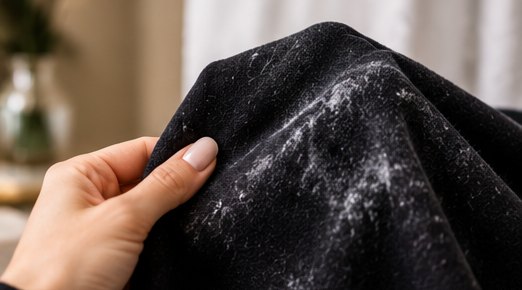
You lift a favourite black knit out of the machine and there they are: pale, chalky streaks across a garment that was perfectly clean an hour ago. It is a frustrating moment, and a common one.
The reassuring news is that white marks after washing are rarely damage. In most cases they are residue left behind by the wash, such as detergent that did not fully dissolve, fabric softener, mineral deposits or lint. They can usually be removed, and with a few adjustments they can be prevented.
What the white marks really are
The cause is almost always one of the following:
- Undissolved detergent. Powder and gel can fail to dissolve fully in cold water, short cycles or crowded drums, leaving chalky streaks on dark fabric.
- Too much detergent. More soap does not mean cleaner clothes. Excess product cannot rinse out and clings to fibres.
- Fabric softener residue. Poured directly on clothes or overused, softener can leave waxy white patches.
- Hard-water minerals. In some areas, mineral deposits can combine with detergent and leave a pale film.
- Lint. Towels, new garments and fleecy items shed fibres that cling to darker clothes.
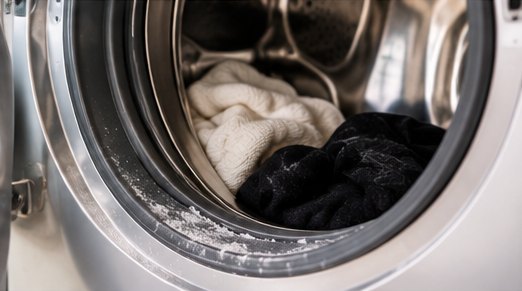
- An overloaded machine. Garments need room to move, rinse and release residue.

Diagnose the mark
Before treating a mark, work out which kind you have. A simple test is to gently brush or rub the area with a dry cloth, then look closely in daylight.
| What you see | Likely cause | First step |
|---|---|---|
| Chalky powder that flakes off | Undissolved detergent | Shake or brush off, then rewash with no detergent |
| Waxy or greasy white patches | Fabric softener | Rinse in warm water; reduce softener |
| Dull, stiff white film | Hard-water minerals | Extra rinse; consider a water-conditioning approach |
| Fuzzy fibres and specks | Lint | Lint roller or damp cloth; wash separately next time |
| Marks that do not move at all | Fading or abrasion | Not residue: seek an assessment |
Remove the marks
Work through these steps in order. They suit most washable dark cotton, jersey and knitwear. Check the care label first.
- Shake and brush off. While the garment is dry, shake it outdoors and gently brush loose residue away with a soft brush or dry cloth.
- Rewash with no detergent. Run the garment alone, or with a few similar items, on an extra rinse or a gentle cycle at the temperature the label allows. Leave out detergent and softener.
- Try a diluted white vinegar rinse for stubborn film. For washable cotton and similar fabrics, a small splash in the final rinse can help dissolve mineral and detergent residue. Check your machine manual first, and never combine it with bleach.
- Check while damp. Look at the garment in daylight. A mark that is still visible means repeating the rinse.
- Air dry. Hang the garment until you are sure it is clear. Heat can fix residue in place.
- Remove any lint. Once dry, use a lint roller or a slightly damp cloth for lingering fibres.
Check your machine
If marks keep returning, the machine is often involved. Residue builds up in the drum seal, the dispenser drawer and the filter, then transfers to clothing.
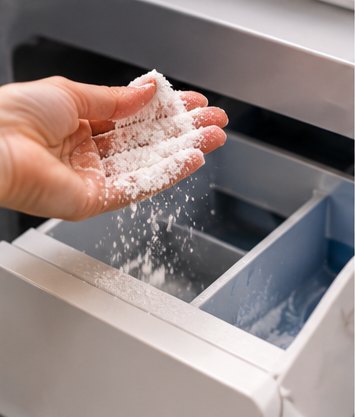
- Clean the dispenser drawer. Remove it if your model allows, and rinse away caked powder and softener.
- Wipe the door seal and drum. Look under the rubber folds, where residue and lint collect.
- Check the filter. Follow the manual to clear lint and debris.
- Run a maintenance cycle. Use a machine cleaner suited to your model, or the cycle your manufacturer recommends, with the machine empty.


Know your fabric first
The care label, not the price, decides what is safe. The finer the fabric, the more gently it should be treated.
| Fabric | First step | Avoid |
|---|---|---|
| Dark cotton & jersey | Brush off, rinse with no detergent | Heat before marks are gone |
| Wool & cashmere | Gentle brush; seek an assessment | Agitation and vinegar |
| Activewear & synthetics | Extra rinse; wash separately | Fabric softener |
| Silk & tailoring | Do not treat at home | Water, rubbing and home remedies |


Stop them coming back
- Measure your detergent. Use the dose for your load size and water hardness. More is not better.
- Do not overload. Leave room for garments to move.
- Use the dispenser. Never pour powder or softener directly onto clothes.
- Match detergent to water temperature. Powders can struggle in cold water, so consider liquid for cool cycles.
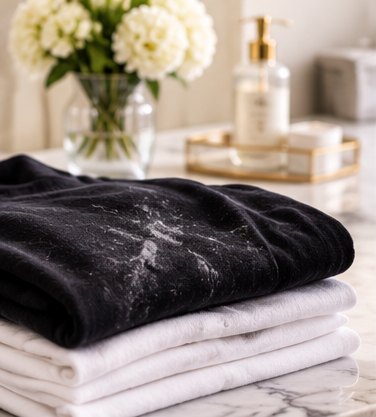
- Wash dark clothes separately from towels. This limits lint transfer.
- Turn dark garments inside out. It protects the surface and hides any lingering residue.
- Choose an extra rinse if you live in a hard-water area or wash heavy fabrics.


Mistakes that make it worse
- Adding more detergent. It increases residue rather than removing it.
- Ironing or tumble drying over the marks. Heat can set residue into the fabric.
- Rubbing hard. It can damage dark dye and leave a worn patch.
- Using bleach on dark clothes. It removes colour and is not a cure for residue.
- Ignoring the machine. A dirty dispenser or seal will keep depositing marks.
When to ask a professional
Some pieces are too valuable to experiment on. If the garment is wool, cashmere, silk or structured tailoring, if it is marked dry clean only, or if the marks do not improve after careful rinsing, a specialist assessment is the safest choice. Marks that do not move at all may be fading or abrasion rather than residue, and no home treatment will reverse that.
Tell your cleaner what you have already tried and which detergent or softener you used. It makes a meaningful difference to the advice you receive.
Frequently asked questions
Are white marks on clothes permanent?
Usually not. Most are residue from detergent, softener, minerals or lint and can be rinsed or brushed away. Marks caused by fading or abrasion cannot be reversed.
Why does it happen mostly on black clothes?
Dark fabric shows pale residue clearly. The same residue may be on lighter garments but is simply harder to see.
Is powder or liquid detergent better?
Either can work. Powder can struggle to dissolve in cold or short cycles, so liquid may suit cool washes. Always measure the dose.
Can fabric softener cause white marks?
Yes, particularly if overused or poured directly on clothes. Use the dispenser and keep the amount modest.
Does Dryz collect across Australia?
Dryz advertises pickup and delivery in Melbourne. Check your postcode on its website; nationwide collection is not established by this guide.
A wardrobe, thoughtfully cared for
Caring for your clothes should feel as considered as choosing them. A little attention to detergent, loading and the machine itself keeps dark pieces looking deep and refined, and knowing when to step back protects the pieces that matter most.
Dryz offers Melbourne pickup-and-delivery dry cleaning and laundry, including wash-and-fold and wash-and-iron services. Check your postcode and ask about the specific garment before booking. For wool, cashmere, tailoring or marks that have resisted your efforts, share the care label and what you have tried so the team can advise on suitable handling.